
The Craft
Goldsmith’s trade in Macedonia
From a bar of silver to silver lace. How Macedonian goldsmiths learned, worked and lived, and how filigree is still made by hand in Ohrid today.

The old workshop, with the bellows for making fire
History
A craft handed down
People in Macedonia have worked gold and silver since antiquity. The village of Berantsi near Bitola gave up a gold pendant from the 5th century BC and a gold earring from the 4th century BC. At Trebenishte and at the Upper Gate in Ohrid, princes of the 6th and 5th centuries BC were buried with gold masks, gold gloves and sandals.
Becoming a master took a long time. A boy started as an apprentice (çırak) and later became a journeyman (kalfa). Learning the craft took 8 to 15 years. When he was ready, his master tied a special belt around his waist in front of the other masters. The guild (esnaf) then gave him a diploma bearing the guild’s seal. Only after that could he open his own shop. Skill was not enough: the guild expected him to be calm, honest and well mannered. The craft usually passed from father to son, and the techniques and secrets stayed within the family.
Good work was well paid. At the beginning of the 14th century a silver gilt belt cost 113 hyperpyrons, and in 1376 a gold belt was valued at 1,000 hyperpyrons, at a time when a horse cost 12 to 15. A single piece could take months, sometimes years.
Goldsmiths worked not only in the towns, but also in the villages and in the larger monasteries. In 1692 a goldsmith named Nikola lived at the church of the Holy Mother of God Perivlepta in Ohrid, where he made crosses and haloes and looked after the church silver. Village masters gave their work a local stamp. The buckles of Velgoshti and the copper coin necklaces of Peshtani, both near Ohrid, are found almost nowhere else, so a piece can often be traced to its village by its style.
The trade reached its peak in the 18th and early 19th centuries. The great centres were Struga, Ohrid, Bitola, Salonica, Kostur, Voden, Seres, Drama, Kavala, Skopje, Prilep and Krushevo. The best masters marked their work with their own seal, and their pieces were valued far beyond Macedonia. When Sultan Rashid visited Bitola, the town’s goldsmiths, led by master Dimitri Fila, made him a silver table weighing 30 kg. The sultan gave the masters a tip of 500 gold liras, and Fila received a written recognition of his mastery. In Struga, an Austrian prince came in person to the shop of Atanas Korkut to buy jewellery. Korkut also made a silver box weighing 2.5 kg for the relics of St. John Vladimir, kept in the Monastery of St. Naum near Ohrid.
From the second half of the 19th century, cheap machine made goods began to replace handmade silver, and most goldsmiths closed their shops or left to work abroad. Only the most stubborn kept the craft of their ancestors alive. The Dereban family of Struga and Ohrid is one of them, with seven generations of goldsmiths. Read the story of the Dereban family.

Gold earring from Berantsi near Bitola, 4th century BC
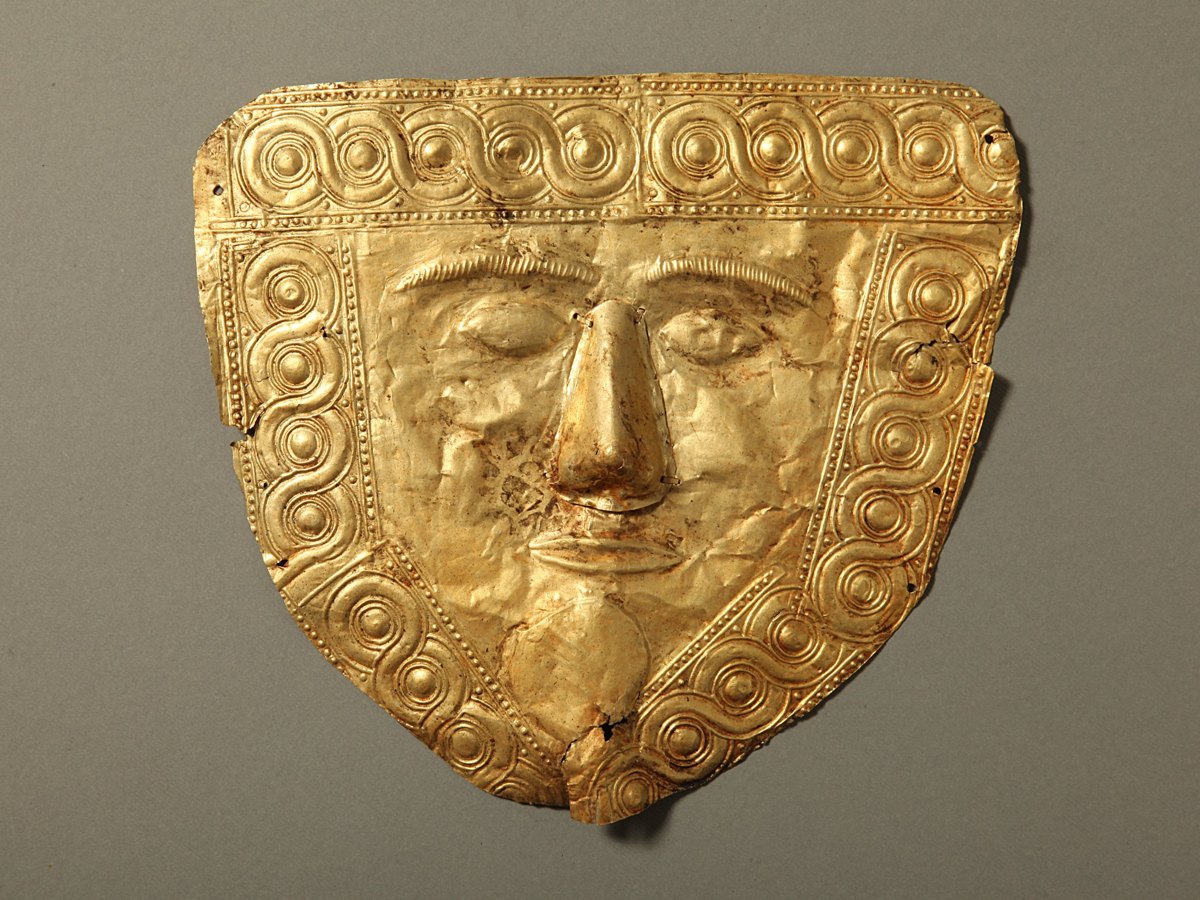
Gold funerary mask, Upper Gate, Ohrid, 5th century BC (Ardjanliev et al., 2018)
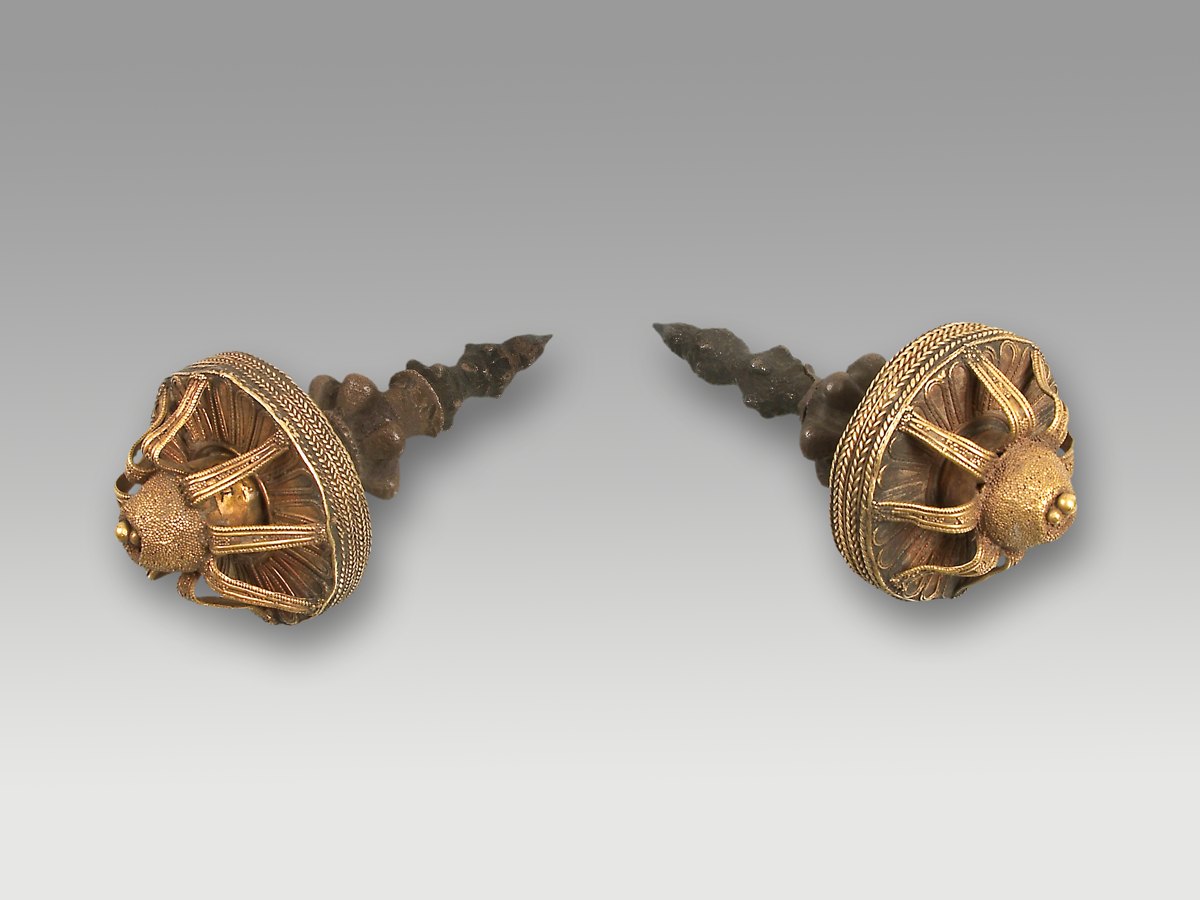
Two silver pins with gold blooming flowers, Trebenishte, 6th century BC (Ardjanliev et al., 2018, p. 85, fig. 17)
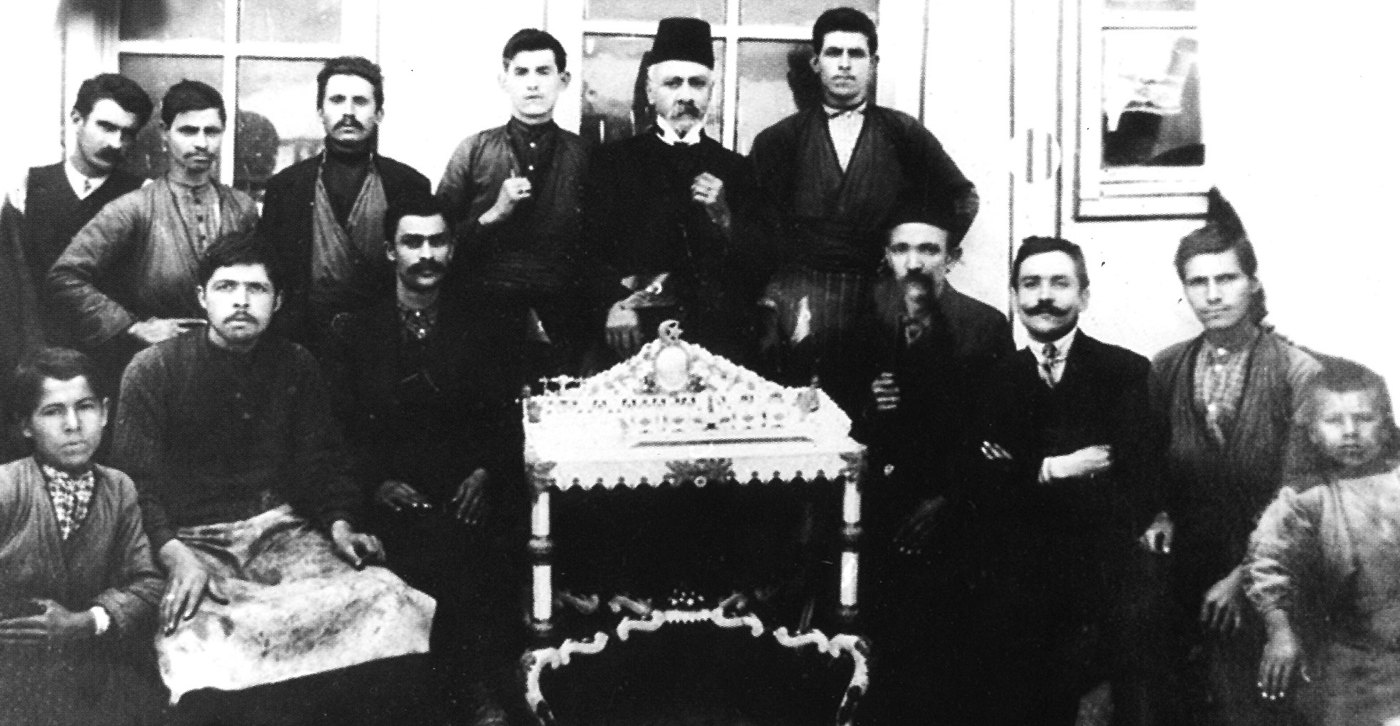
Master Dimitri Fila and his assistants beside the silver table made for Sultan Rashid, Bitola
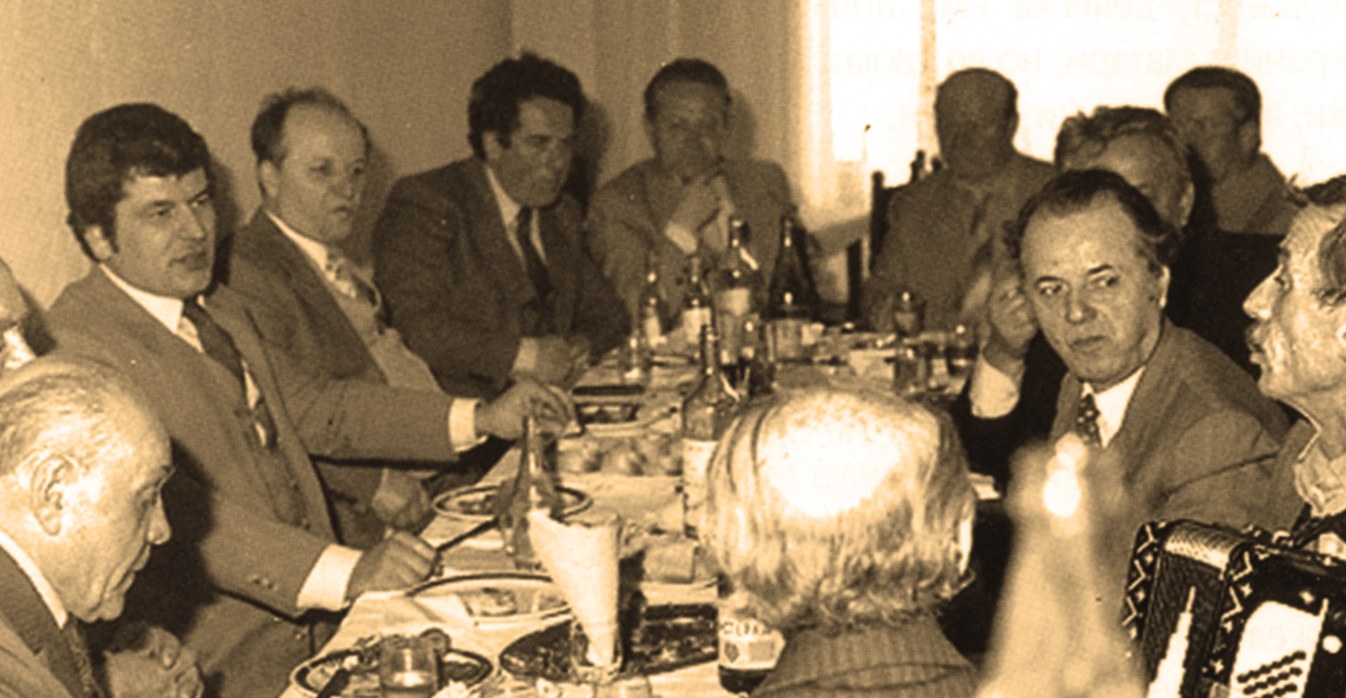
Bitola goldsmiths at their traditional gathering on the guild feast day, Sretenie (the Presentation of the Lord)
The process
How filigree is made
Filigree means “thread and grain”: jewellery built from fine silver wire. Every tool shown here comes from the Dereban family workshop and is on display in the museum.
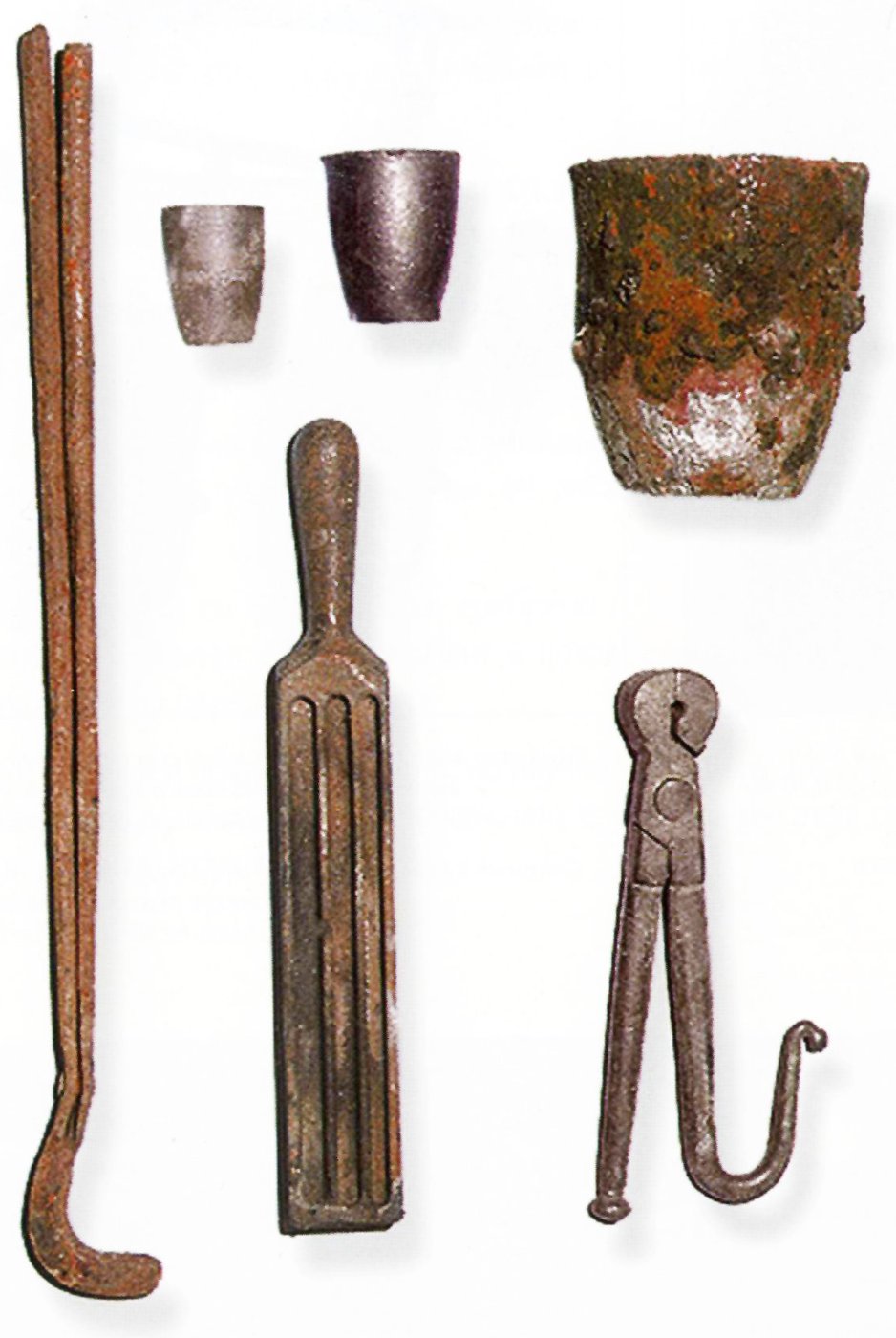
Earthenware melting pots, the iron kitar mould and fire tongs
Step 1
Melting and casting
Pure silver is melted in a small earthenware pot placed over charcoal. The fire is kept hot with wooden and leather bellows, and the pot is lifted with long fire tongs.
The molten silver is then poured into a kitar, an iron mould with grooves coated in wax. It comes out as bars 8 to 10 mm thick.
Step 2
Drawing the wire
Each bar is pulled again and again through the holes of a sirt, an iron draw plate. The holes run from 10 mm down to a quarter of a millimetre, and each pull makes the wire thinner and longer.
Vangel used to say that a kilogram of silver becomes a kilometre of wire, almost as thin as a human hair.
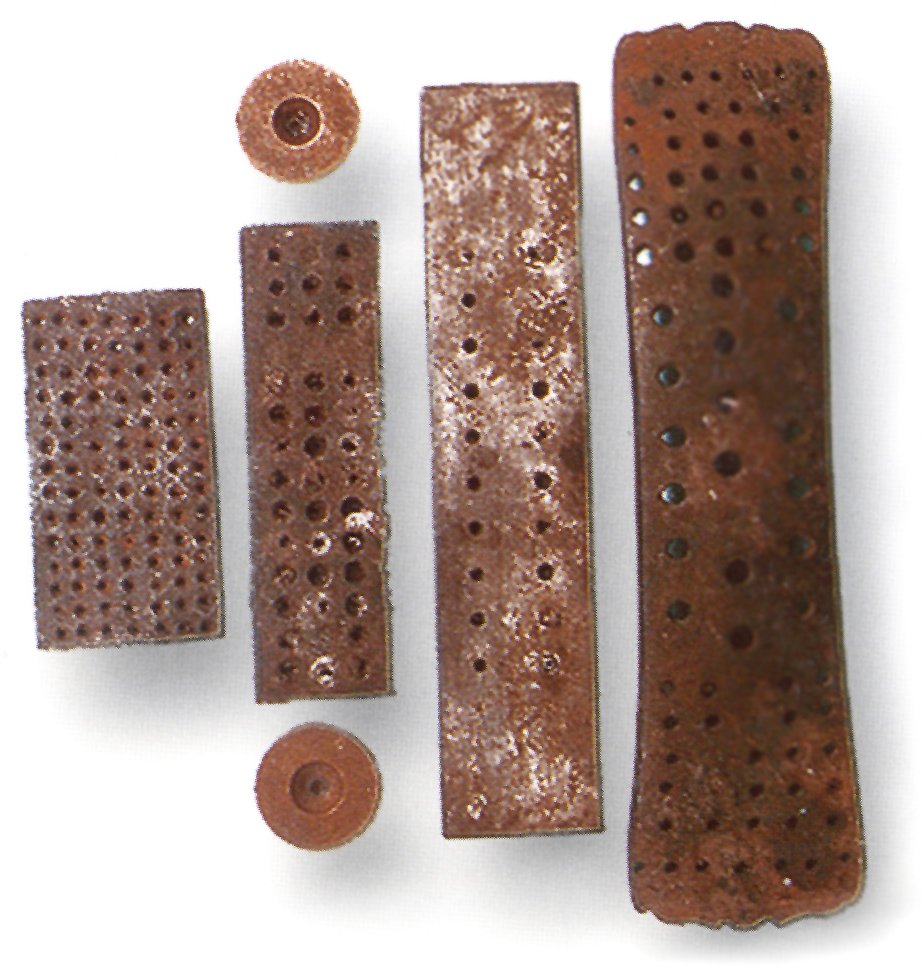
Sirt draw plates for drawing silver wire

Horn hammer, hammer, wooden clamp, awls and bench vice
Step 3
Twisting and flattening
Two wires are twisted together on the skoropana, a wooden spinning tool, which gives filigree its rope like texture. Part of the wire is hammered flat on the anvil to make the frame. The rest is cut into short pieces, the “stuffing” that fills the frame.
Step 4
Building the piece
The master bends the flat wire into the outline of the piece. He then fills it with tiny curls of twisted wire, using fine pincers (çift), scissors (kesme) and shaping tools. This is the slowest part of the work. One piece can take days, and an exceptional one can take years.
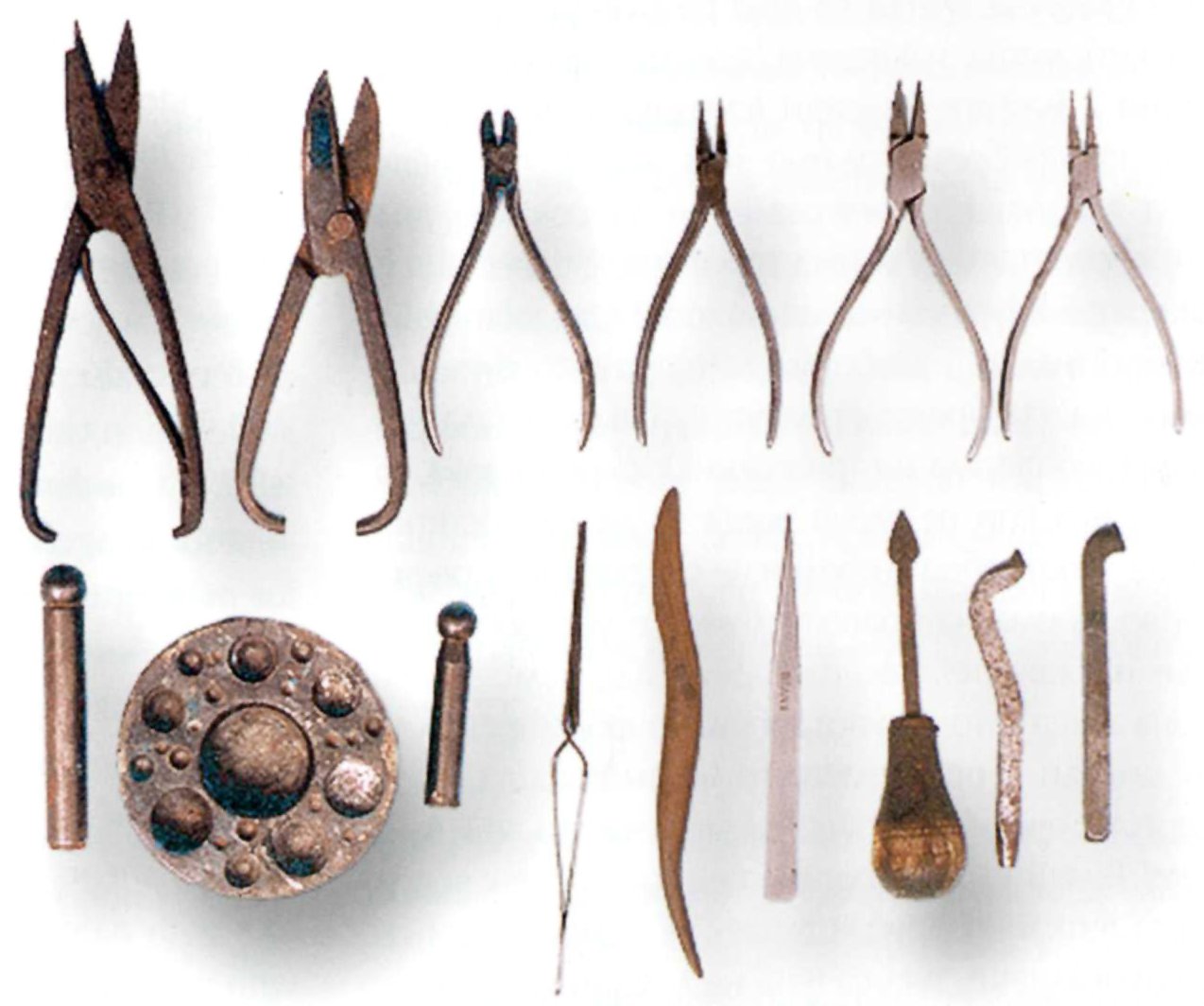
Scissors, shears, pincers, alkopit and shaping tools
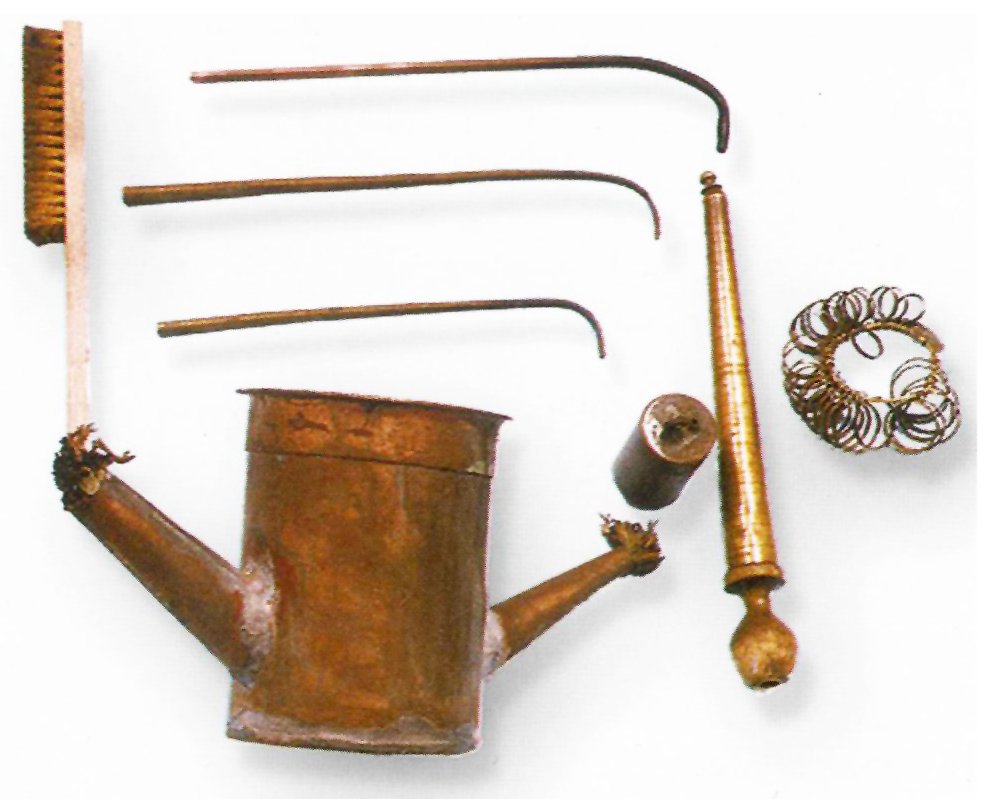
Oil lamp with blowpipes, brass brush and ring measures
Step 5
Soldering
Solder powder (aslem) is sprinkled over the piece, which rests on an iron sieve. The master then blows the flame of an oil lamp onto it through a thin blowpipe. He controls the heat with his breath, so that the solder melts and the fine wires do not.
Step 6
Cleaning and finishing
Soldering leaves the silver grey. The piece is boiled in sresh, a cleaning solution, in a copper cup (tas), scrubbed with a brass brush and dried in wood shavings. Finally it is polished until it shines.
Files, mandrels for rings and bracelets, a bow drill (matkap) and engraving chisels finish the details.
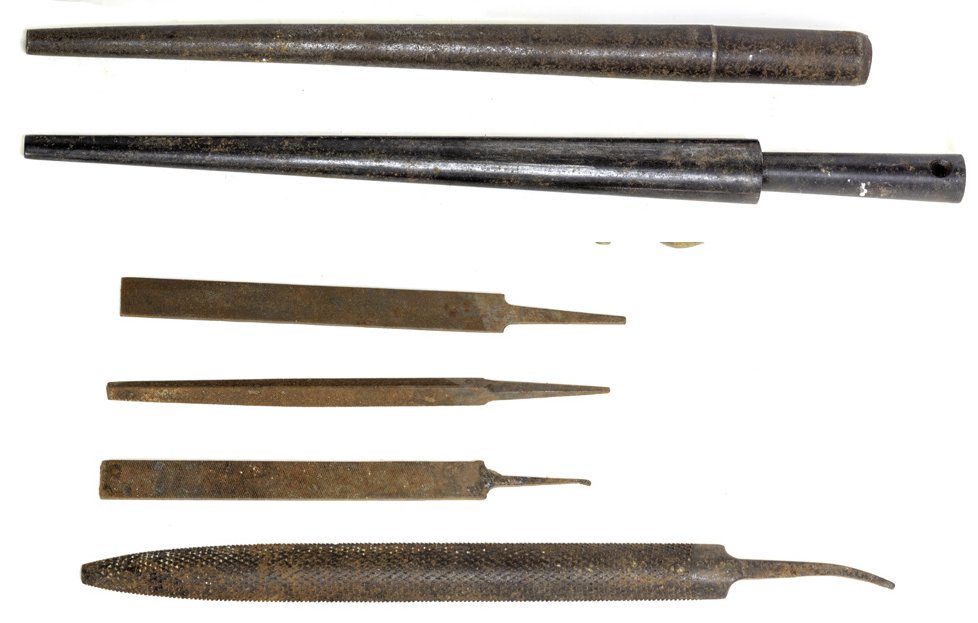
Mandrels and files

Bow drill (matkap)
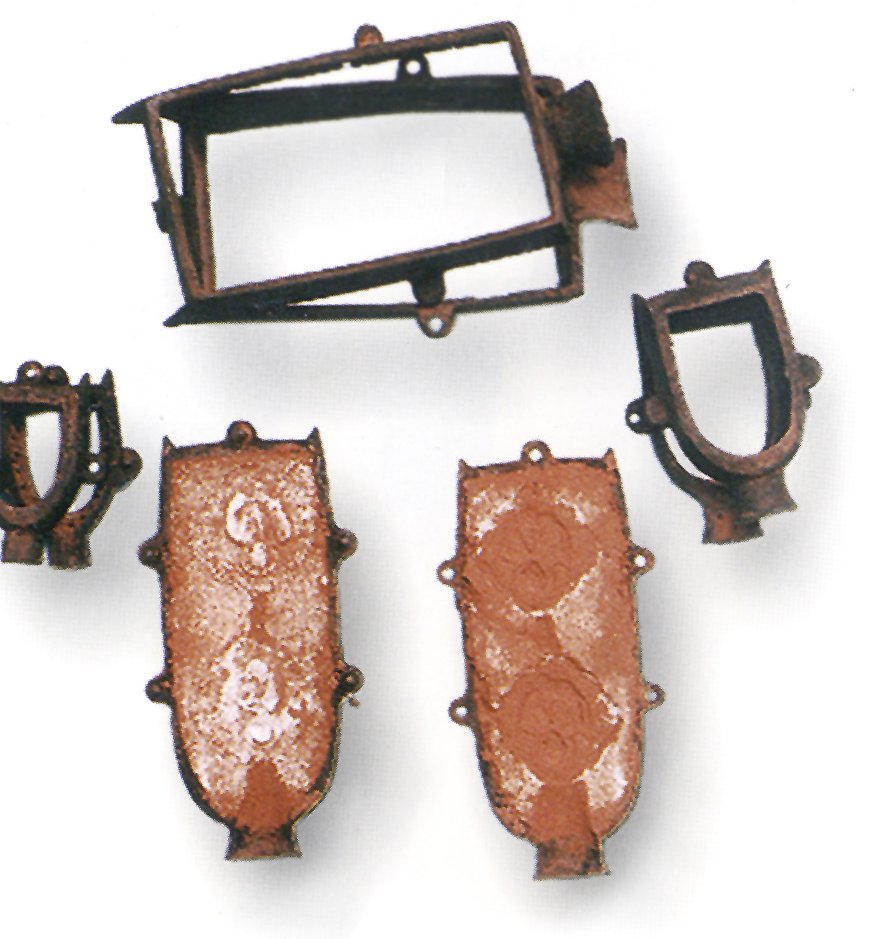
Iron casting frames

Moulds
Decoration
Other techniques
Goldsmiths also cast pieces in moulds and set tiny silver grains on the surface, a technique called granulation and known since the 3rd millennium BC. They filled engraved lines with black niello (savat) and fired enamel onto the silver.
In the workshop
The chest of drawers, 1797
Every master kept his most valuable pieces in a chest with many small drawers (udzhare). The chest has a handle on each side. In the evening, when the shop closed, the apprentices carried it to the master’s house. The Dereban chest dates from 1797 and has been handed down from father to son.
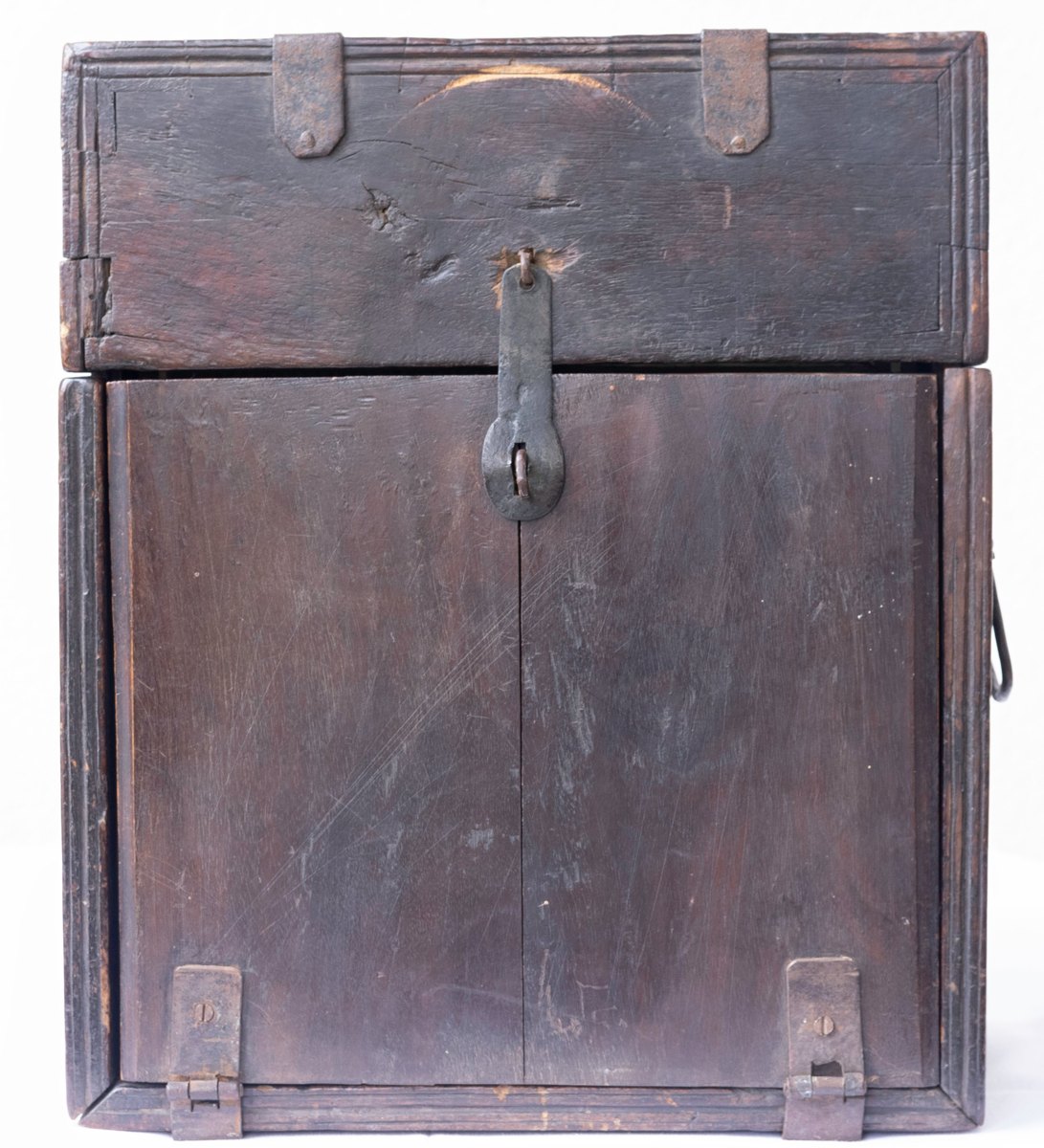
The Dereban chest closed, with a handle on each side for carrying
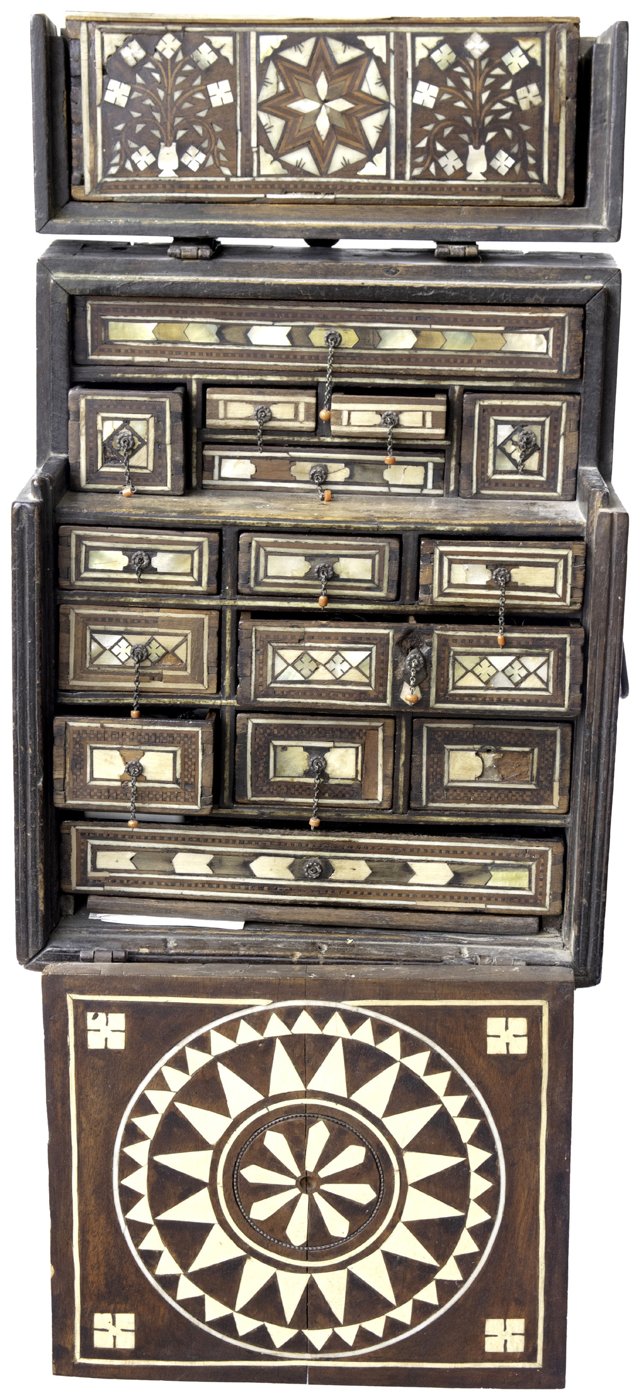
The chest open, with its many small drawers, 1797
See them in the museum
These tools are on display in the Museum of Filigree in the Ohrid bazaar, in the shop where Vangel Dereban worked. Come and see how a bar of silver becomes lace.
Symbols and protection
Jewellery and its meaning
Jewellery has never been only decoration. It showed a family’s wealth and status, and a ring passed from father to son became the family’s sign.
Jewellery also protected its wearer. A newborn baby got a coin or a small cross sewn onto its cap against the evil eye. In the Mijak villages, the bride and groom looked at each other through a ring and said “I see you through a ring, to enter your heart.” Soldiers carried a hazelnut filled with mercury for luck. Every stone had its meaning: blue for the sky, red for strength and life, green for new life.
The richest jewellery belonged to women’s folk costume. A Mijak woman’s festive costume weighs about 30 kg, and several of those kilograms are filigree. In the Ohrid and Struga fields, girls wore a panzur, a cord of coins at the end of the braid that jingled as they walked.

Urban folk costume

Woman’s costume from the Ohrid field (collection of Vladimir Yanevski)

Bridal costume from Galichnik
The collection
Types of jewellery
Jewellery is usually grouped by where it is worn: on the head, around the neck, on the hands and on the clothes.
Head and ears

Forehead jewellery with gold coin

Head pins
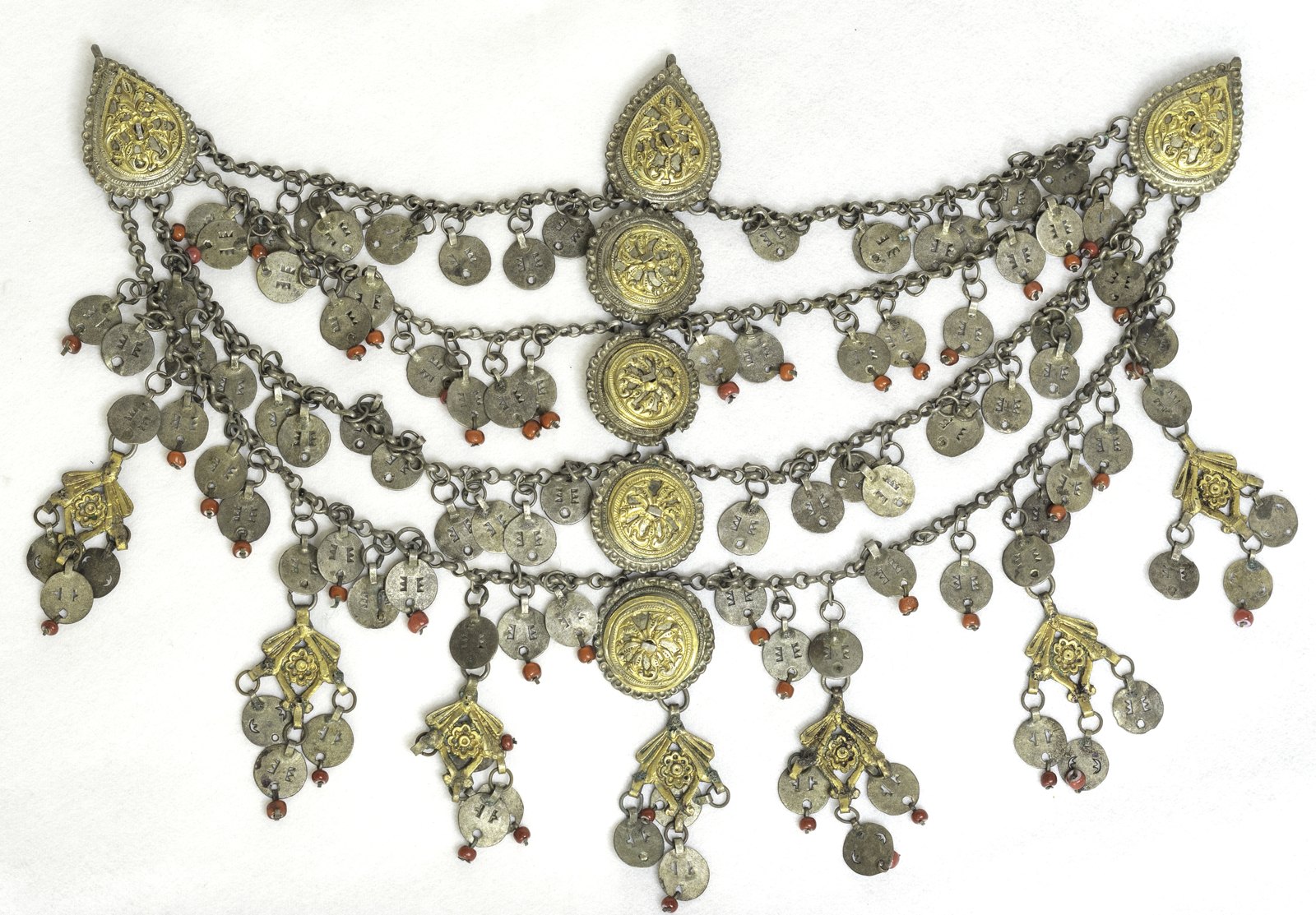
Head jewellery

Head jewellery

Earrings
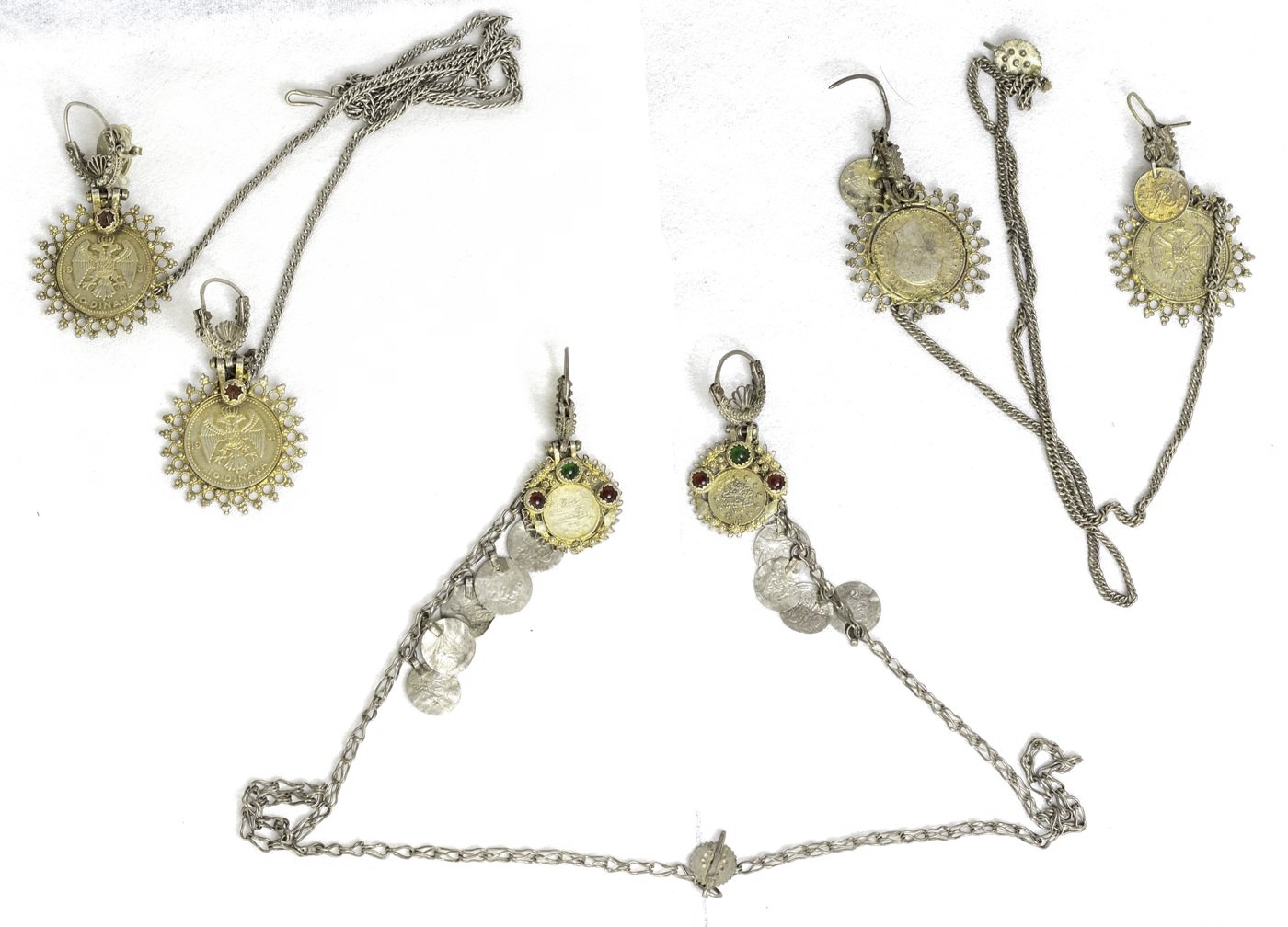
Earrings
Neck and chest
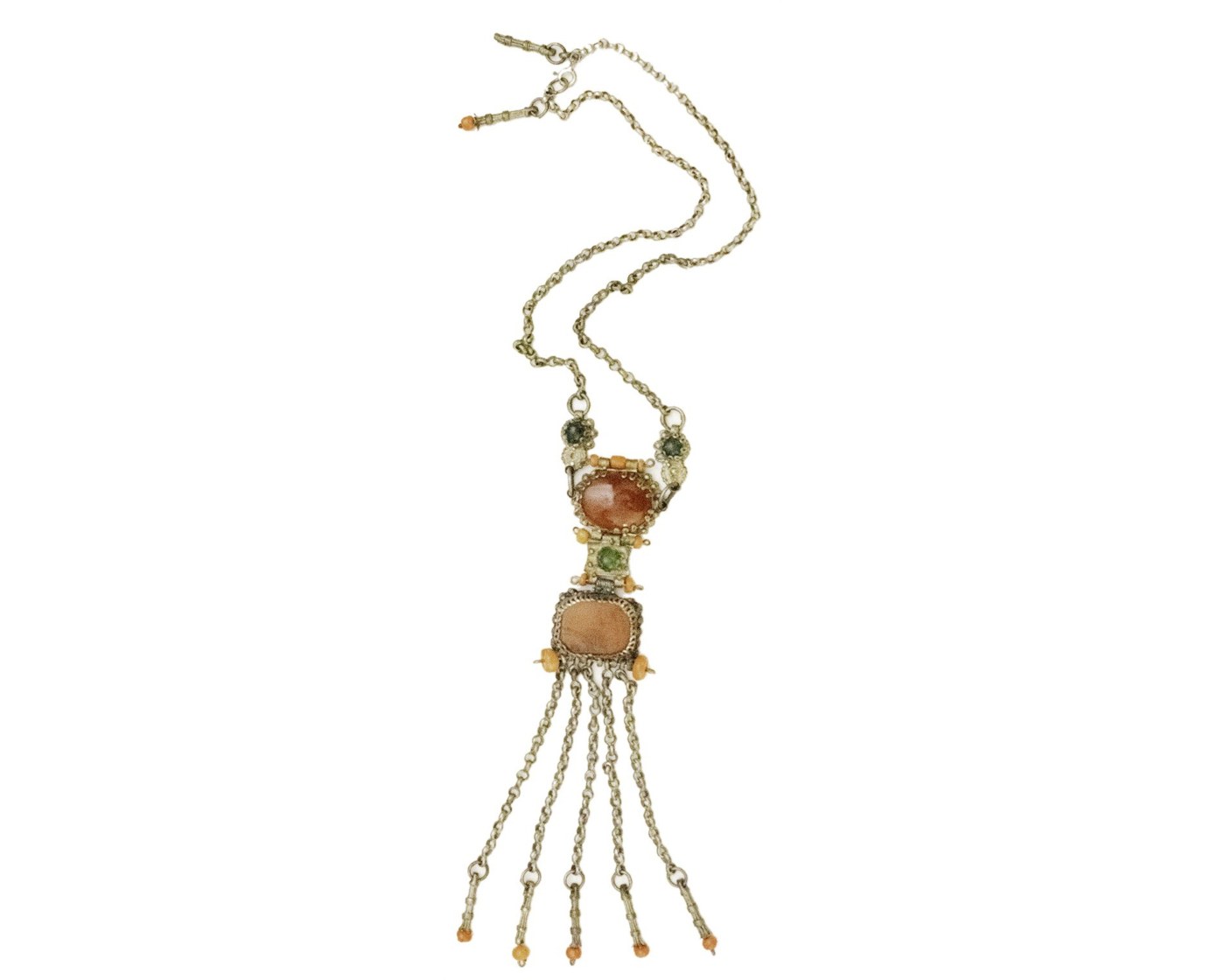
Necklace
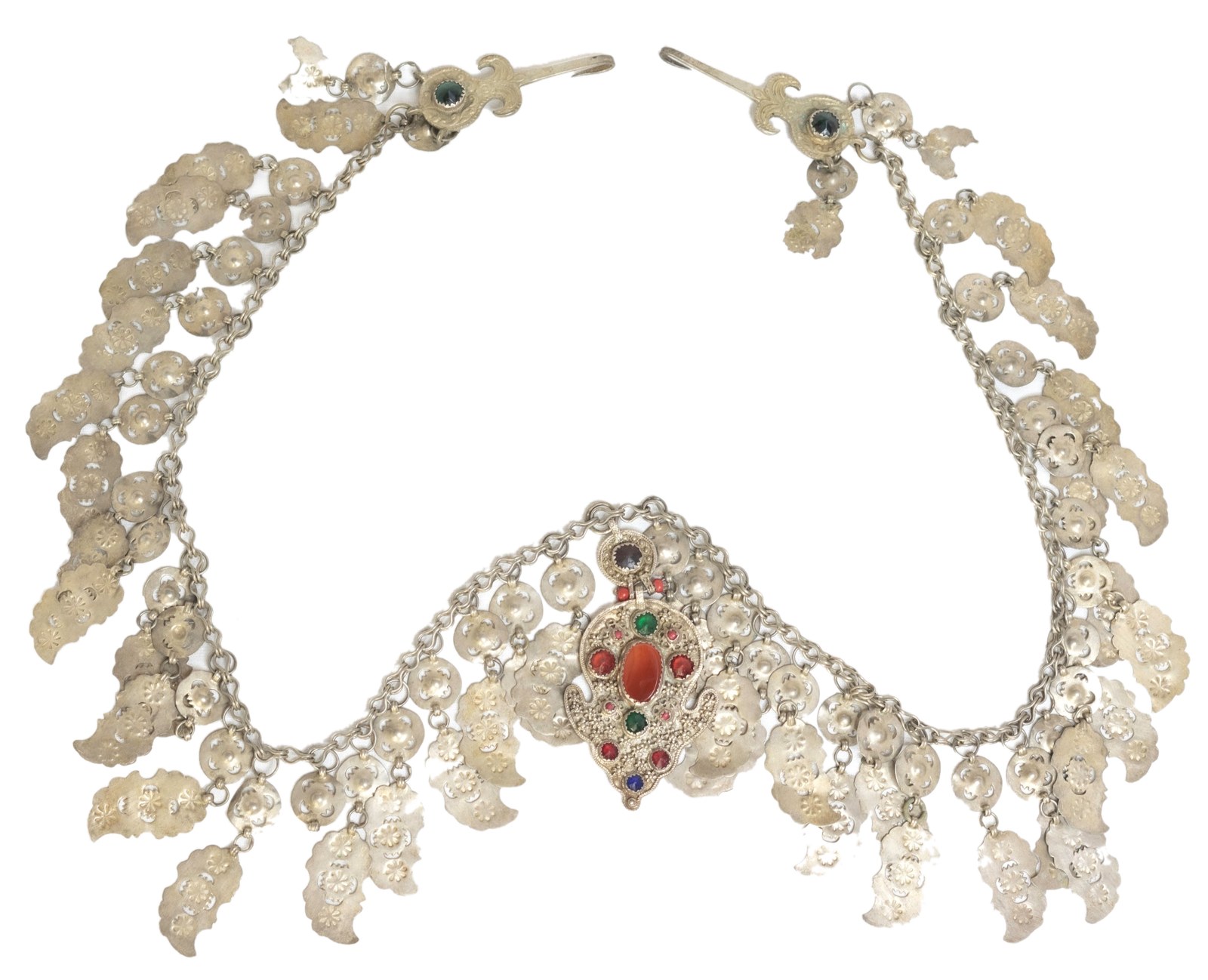
Necklace of small copper coins (mangir), Ohrid district
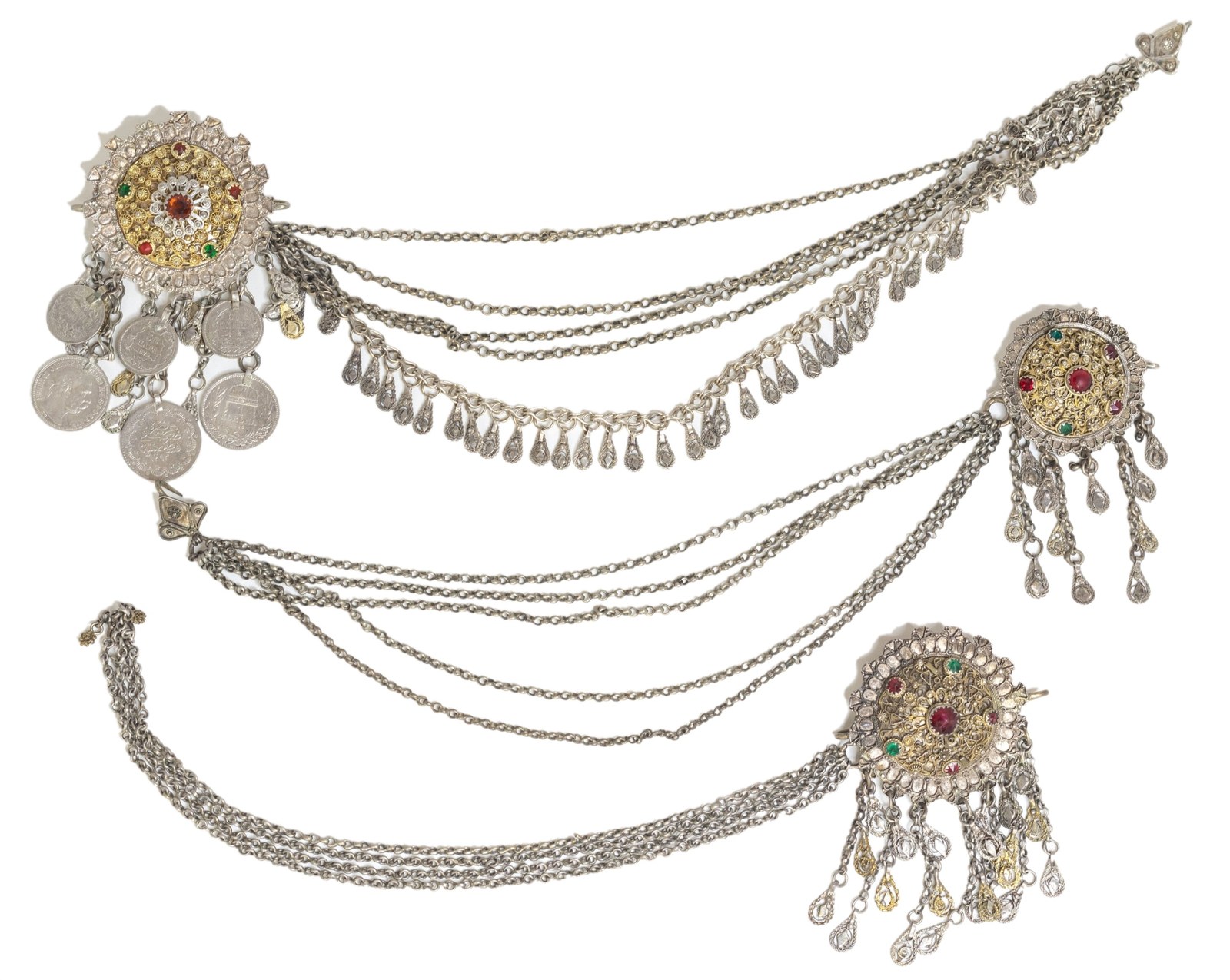
Chest jewellery
Hands
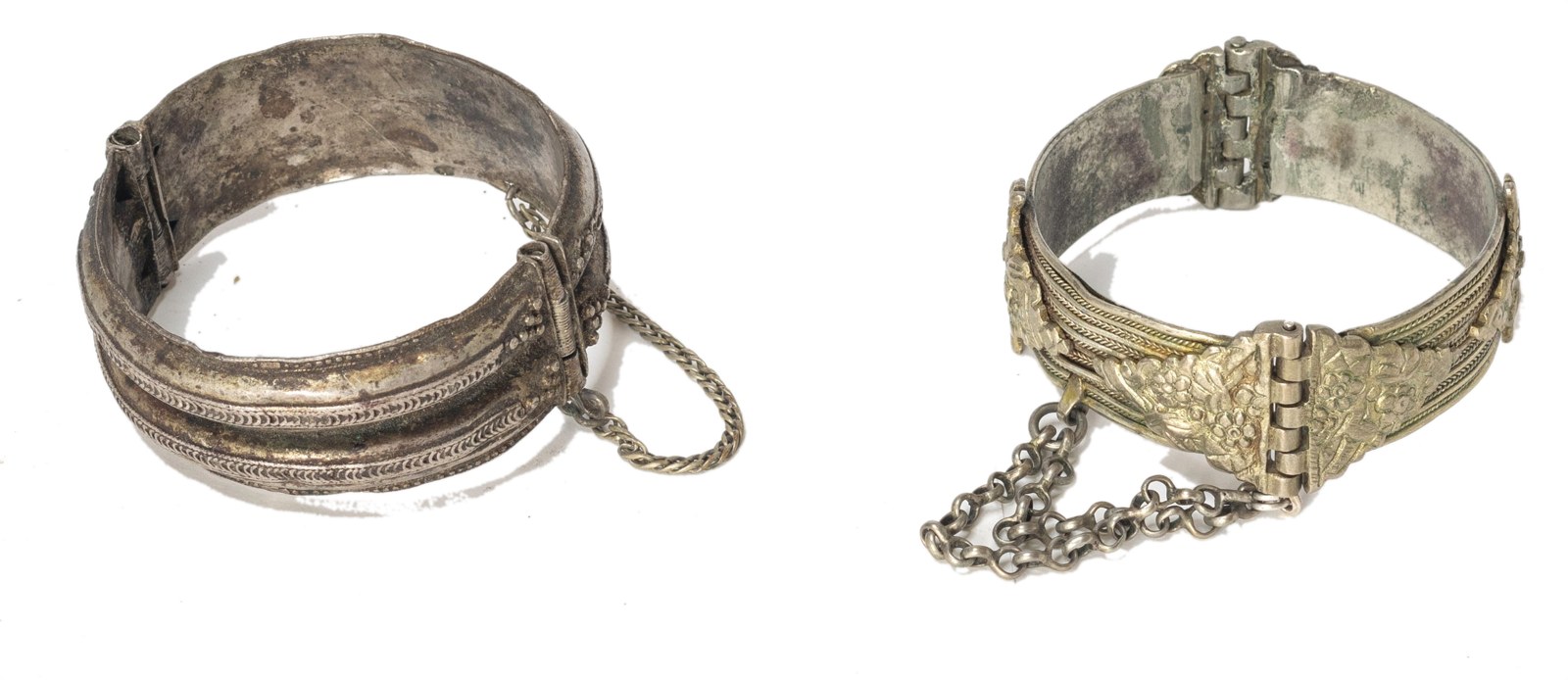
Bracelets
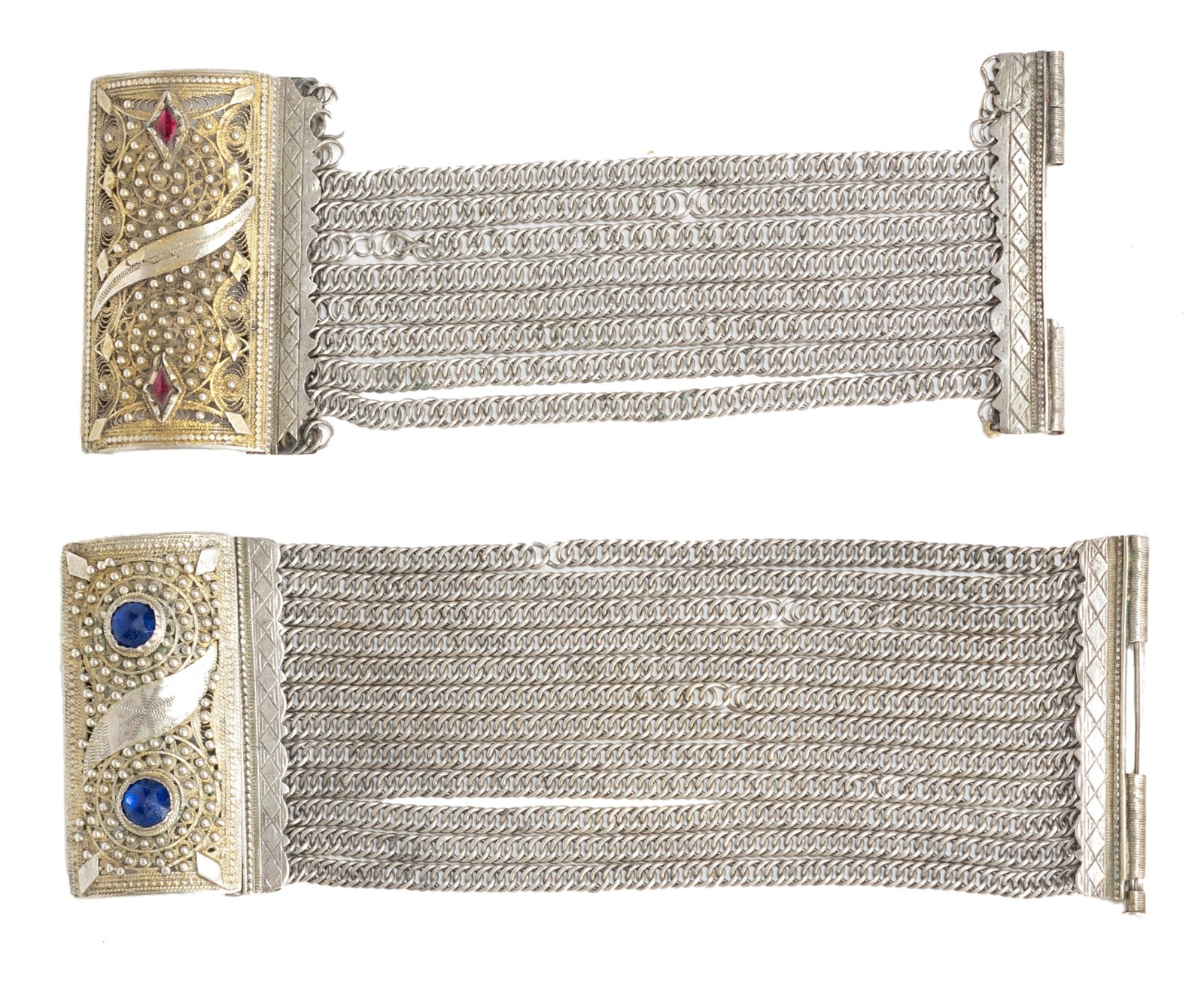
Bracelets
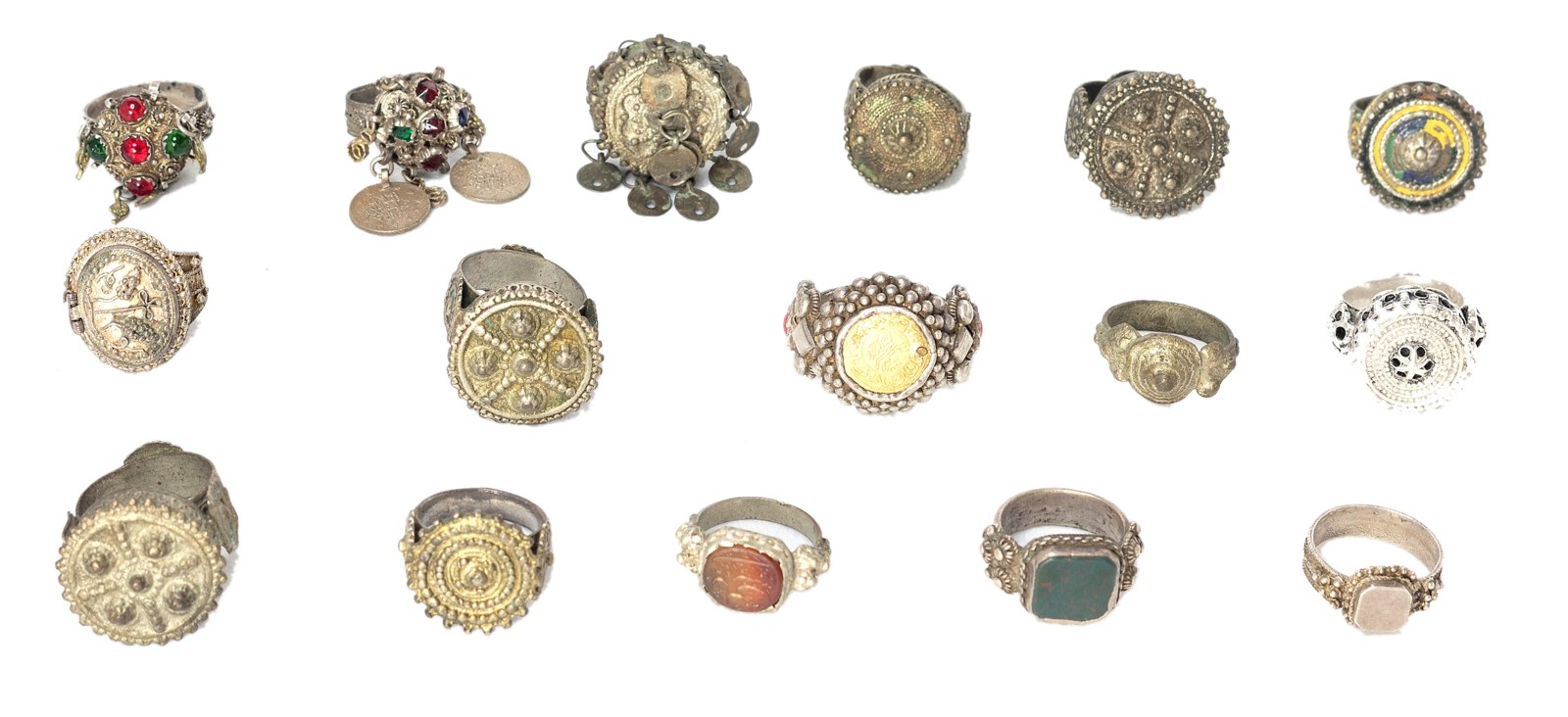
Rings
Belts and buckles
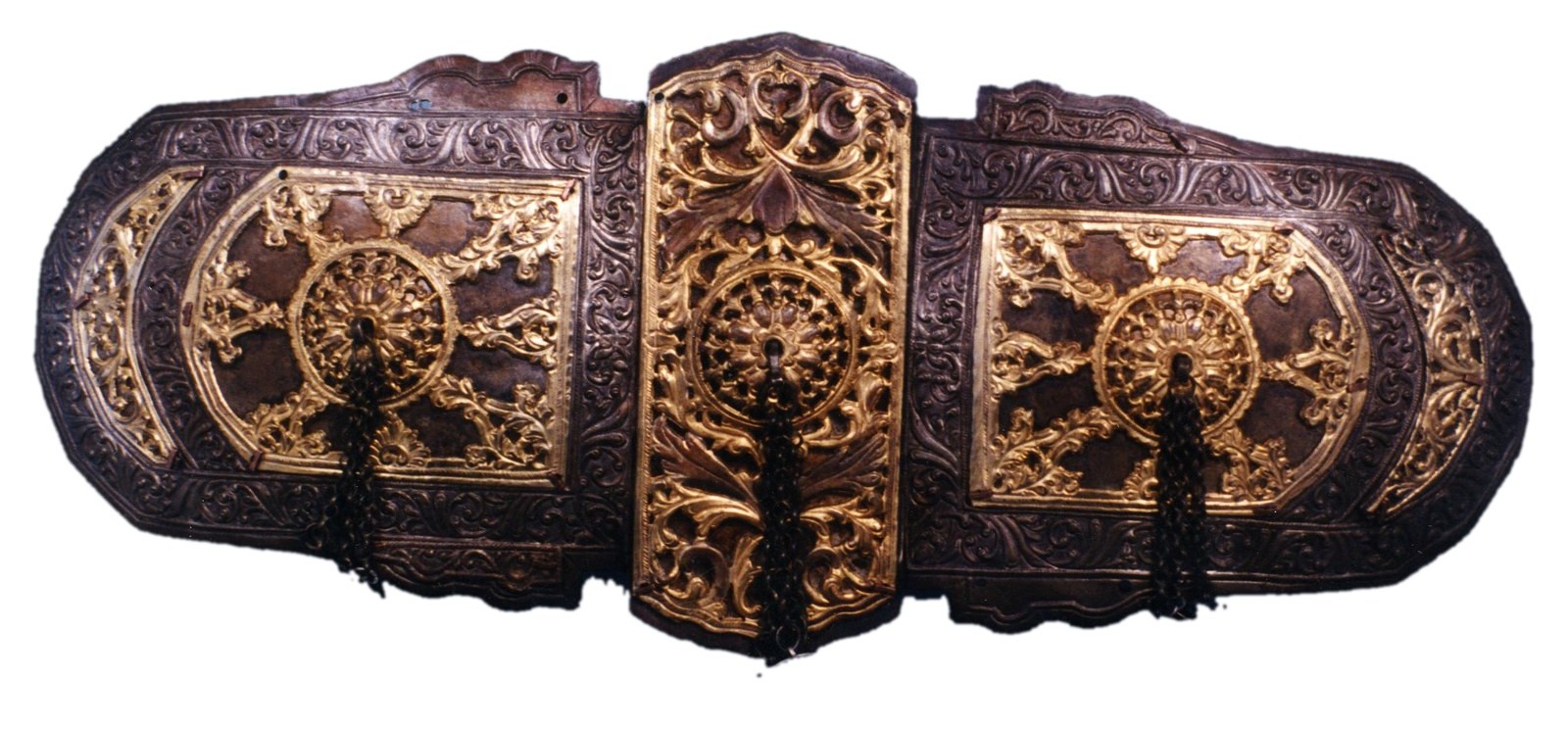
Belt buckle (pafta) from the Mijak region
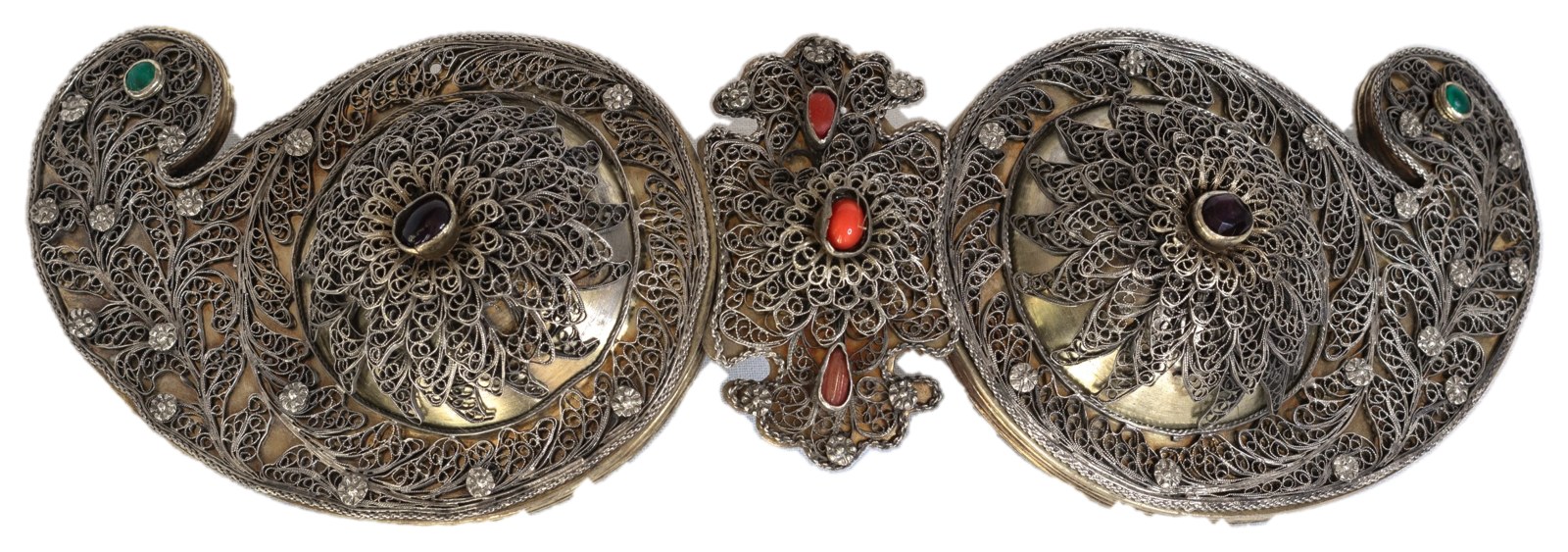
Filigree belt buckle
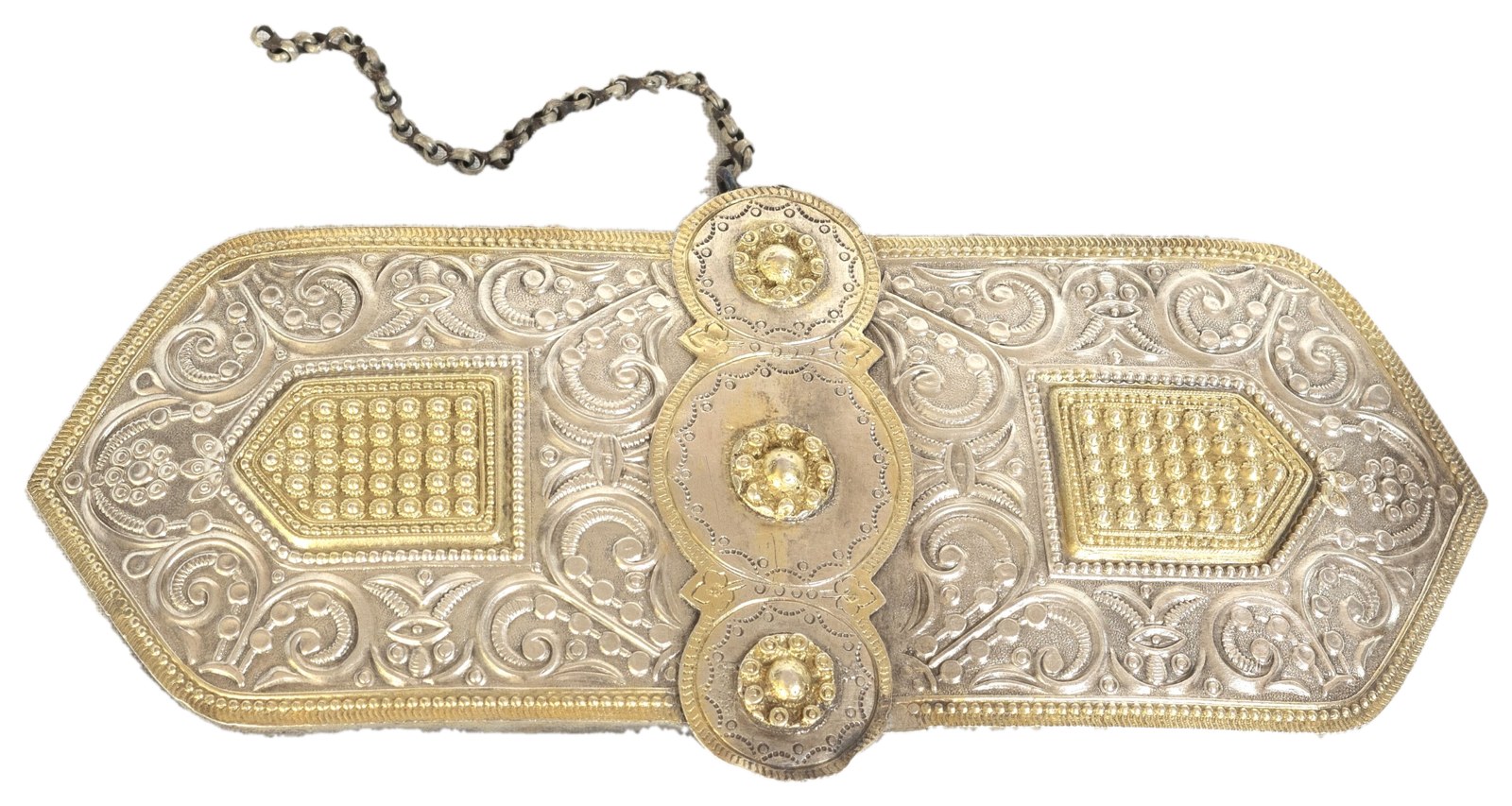
Silver gilt belt buckle
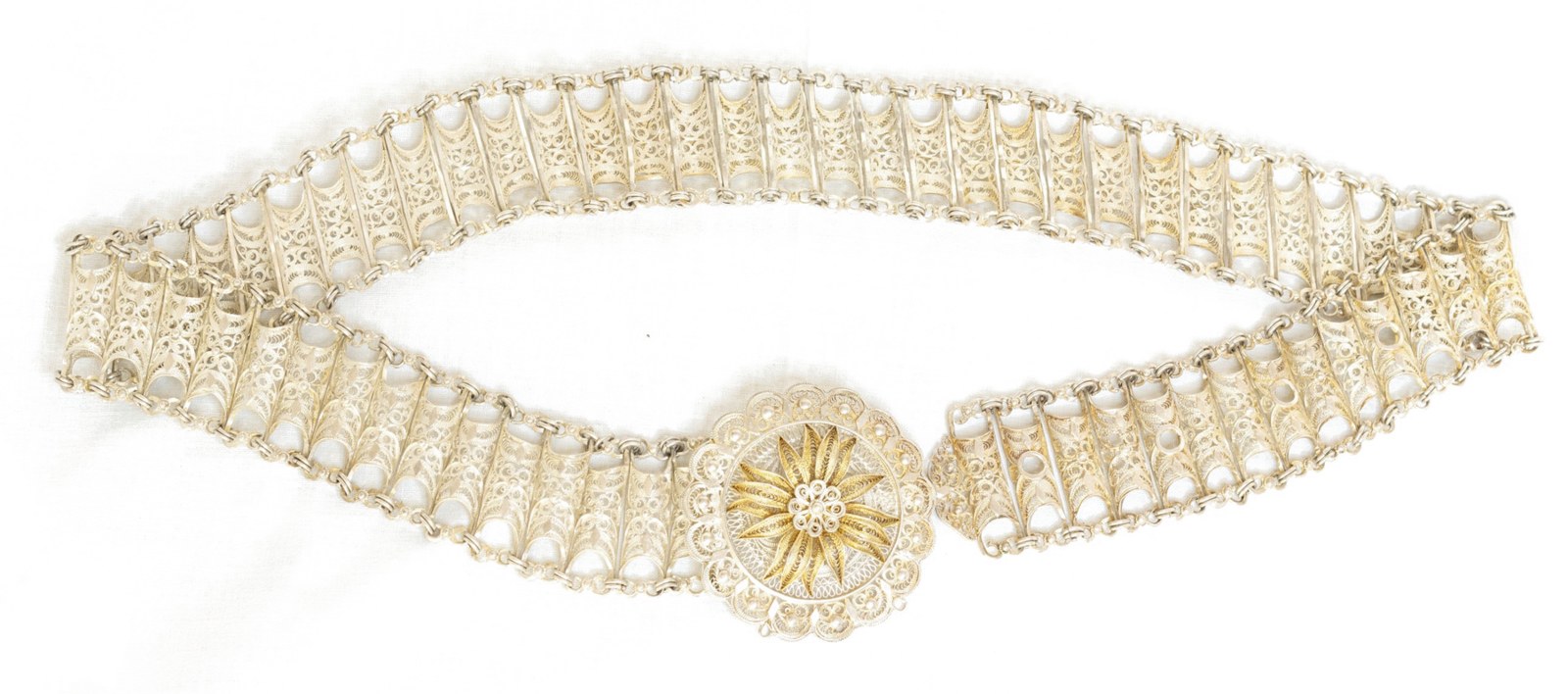
Filigree belt
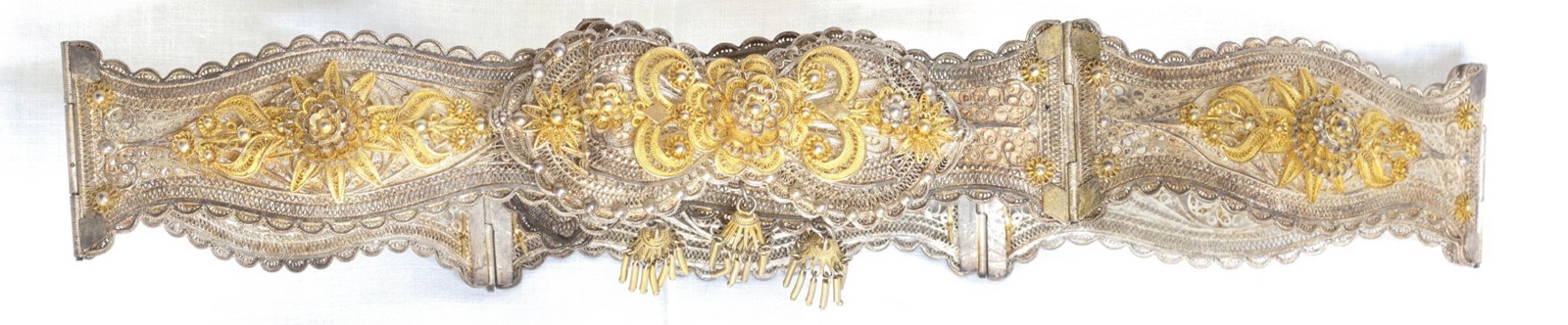
Gilded filigree belt
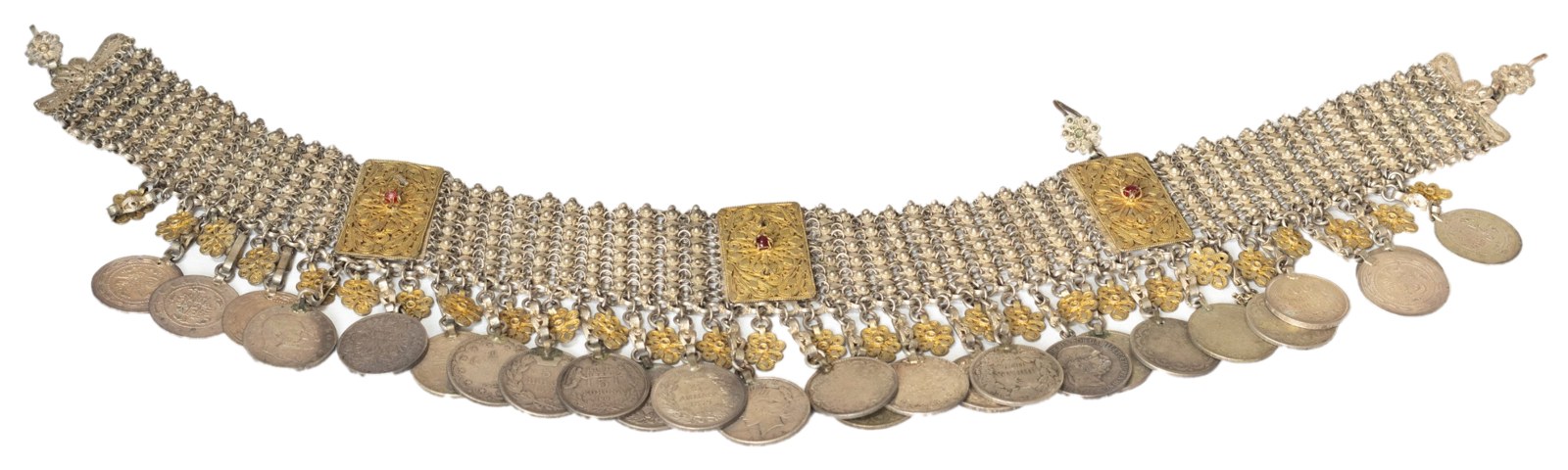
Belt with coins, Galichnik
Beyond jewellery
Silver for the home
Goldsmiths made more than jewellery. For the home they made trays, cups, coffee and sweet sets, candlesticks, inkwells, mirrors, jewellery boxes and cigarette cases. The Dereban workshop made all of these.
Ohrid
Silver for the church
For the church they made icon covers, crosses, censers, chandeliers, chalices and reliquaries. Ohrid was the seat of the Archbishopric, so church silver reached its peak here. The silver covers of the Ohrid icons, made between the 12th and 14th centuries, are among the finest goldsmith’s work in the Balkans.
For the home
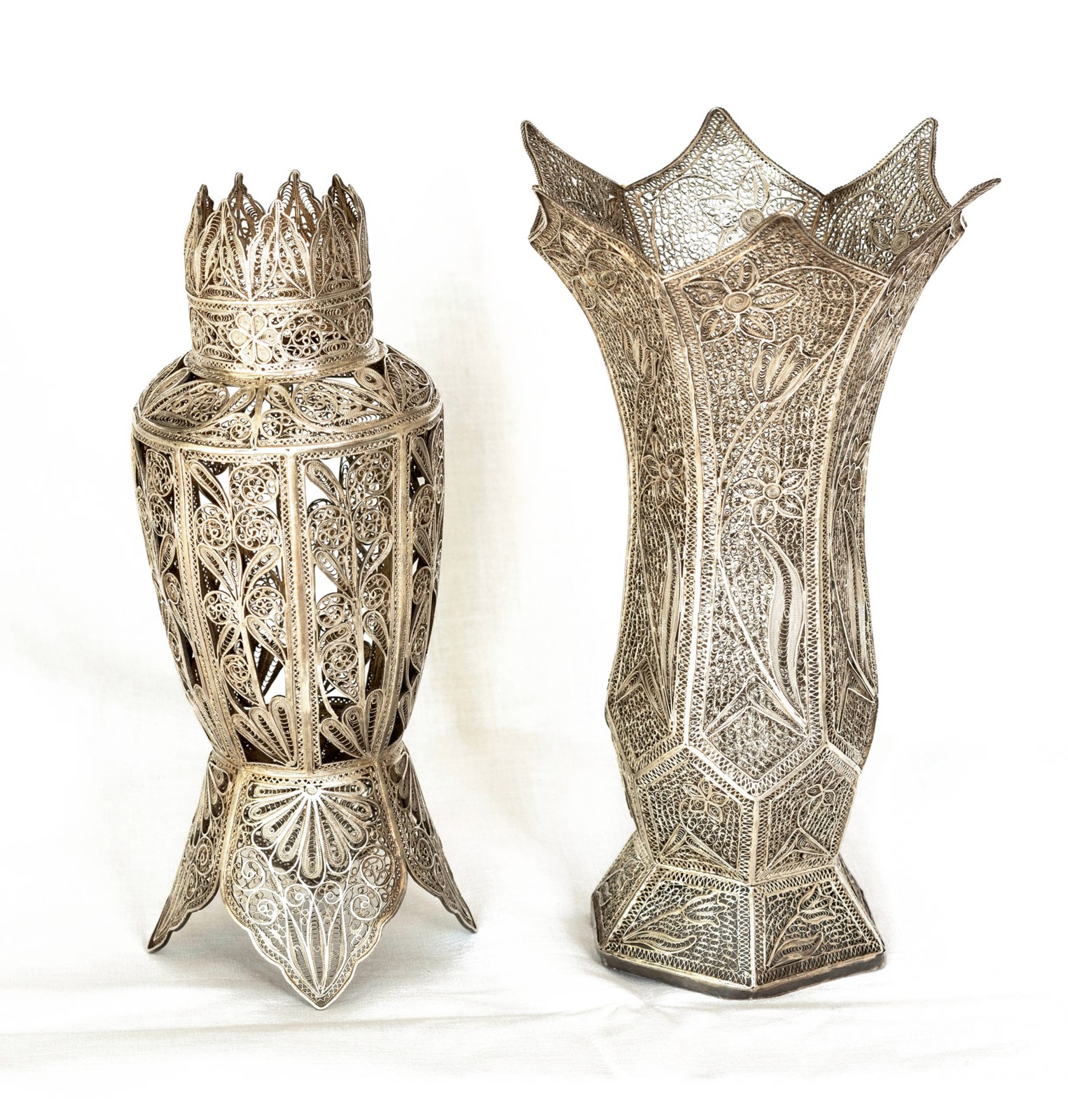
Filigree vases
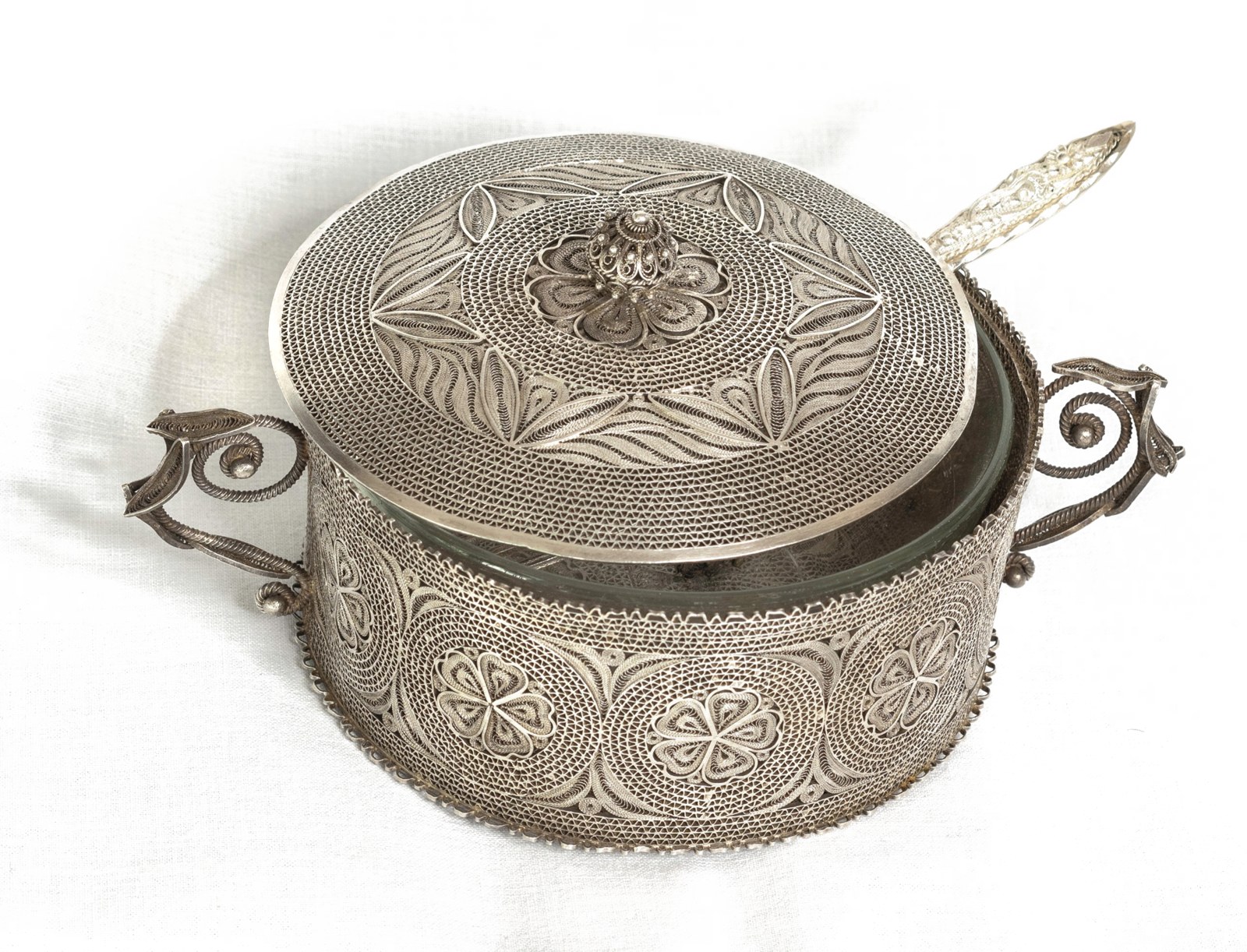
Filigree preserve dish with spoon
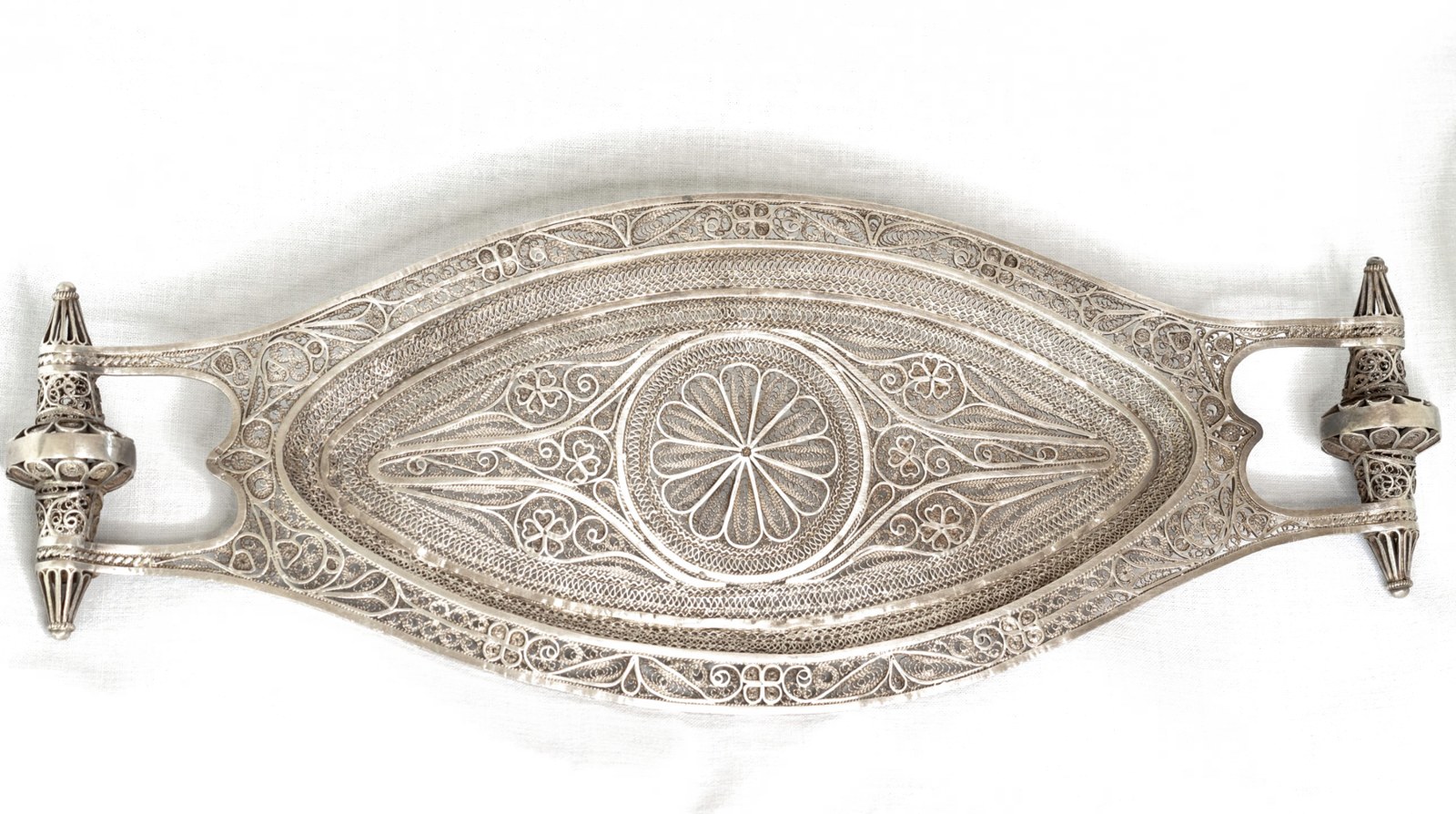
Filigree tray
For the church
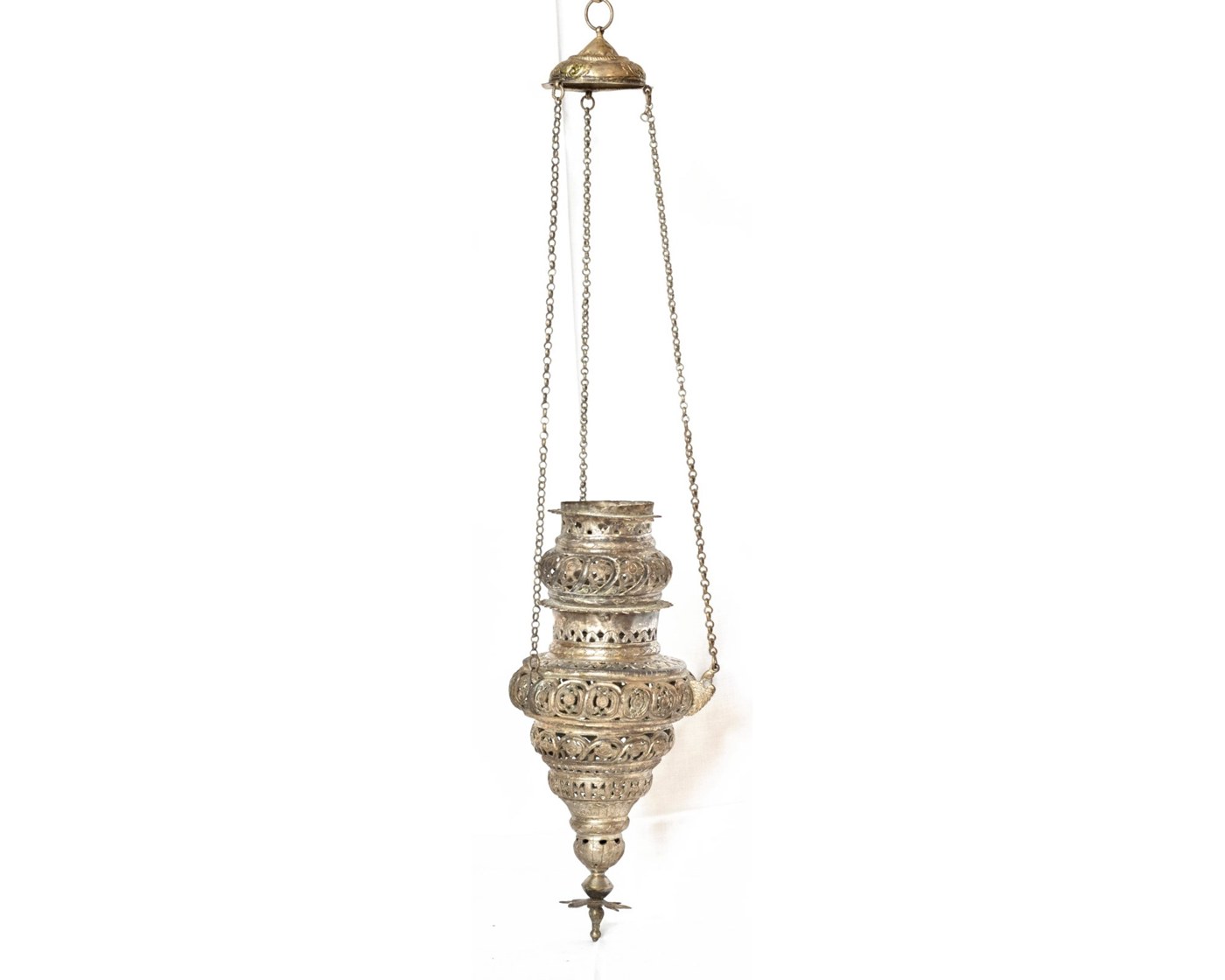
Silver icon lamp (kandilo), hammered, 18th century
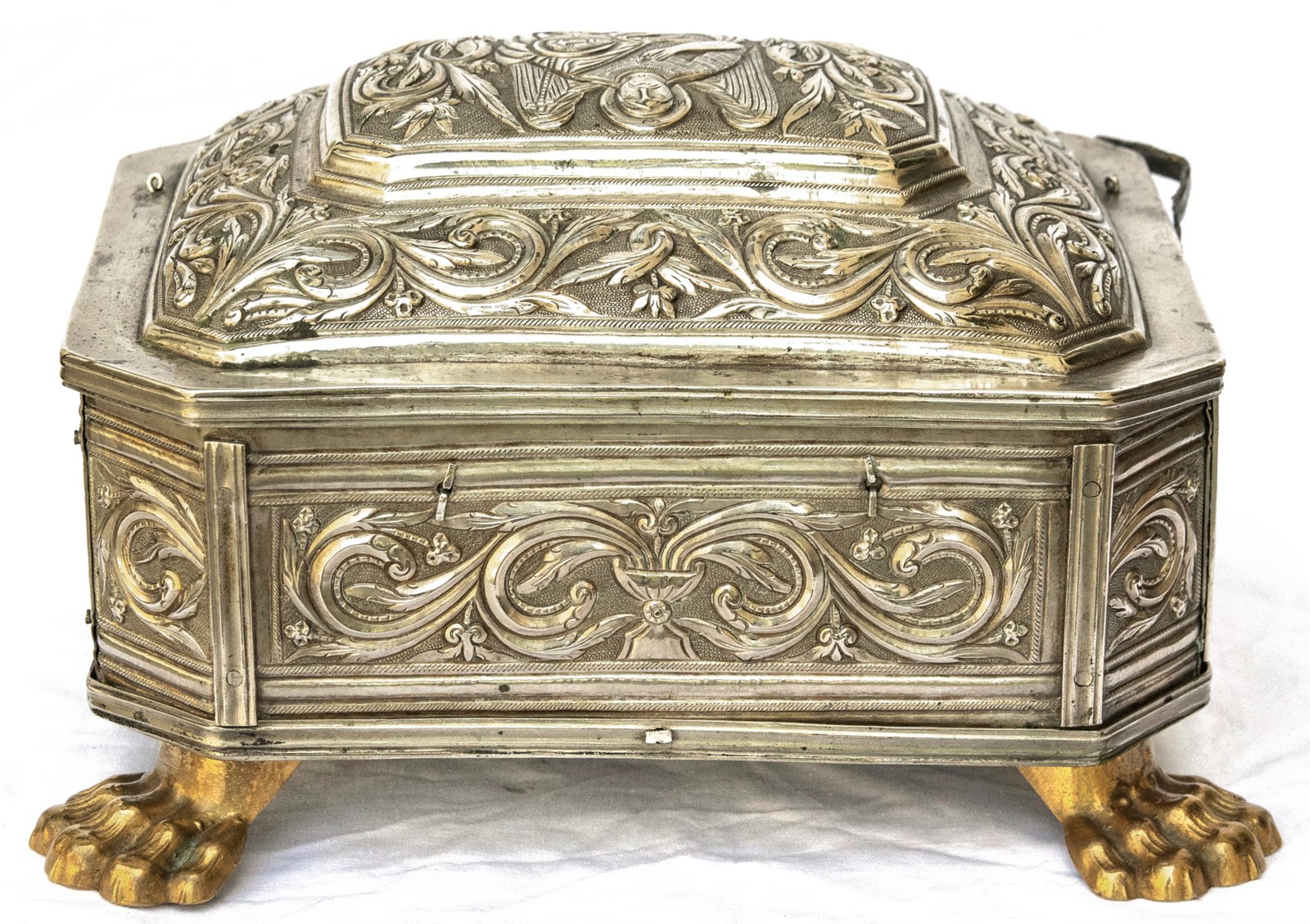
Silver box for church use, 18th century
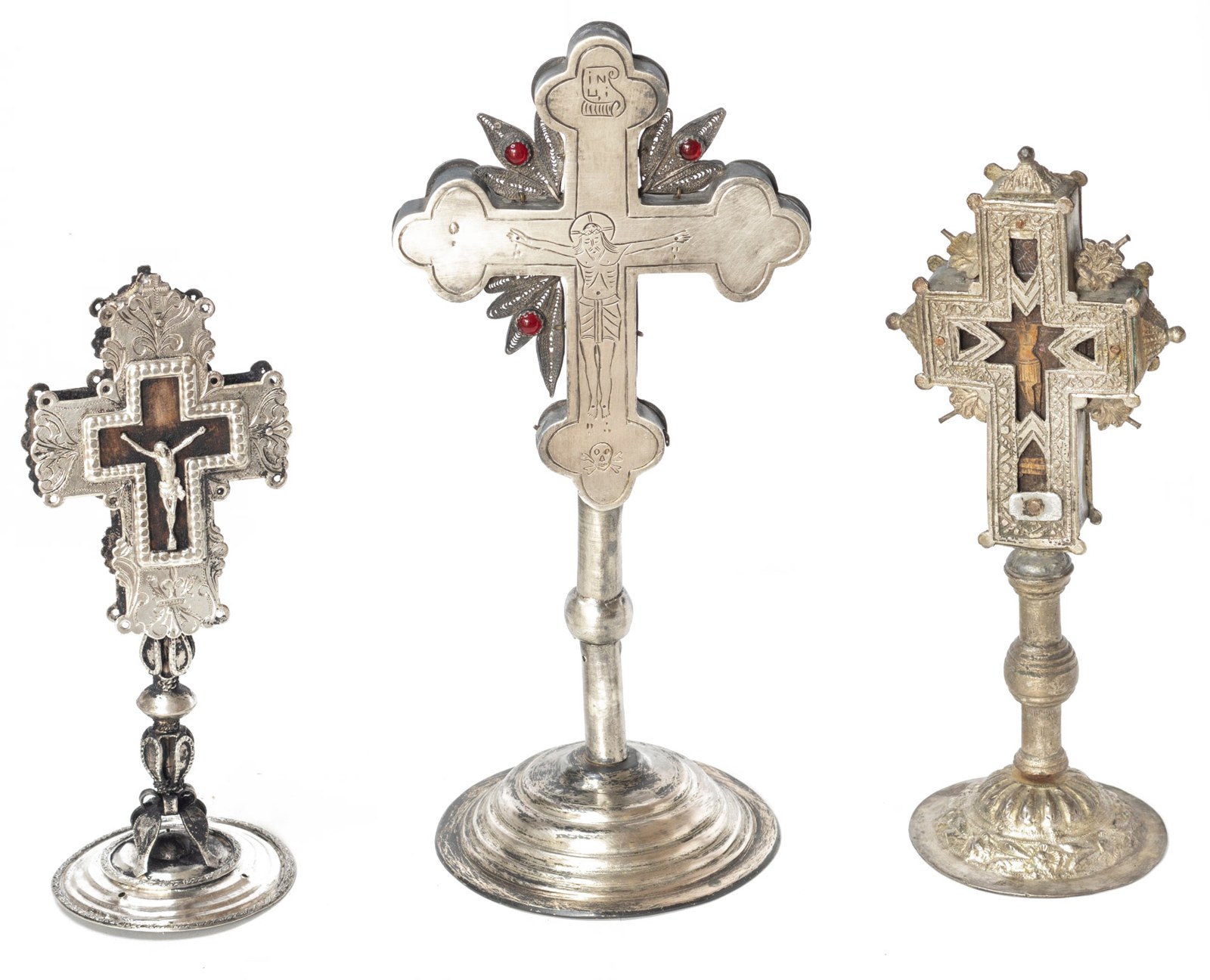
Silver crosses
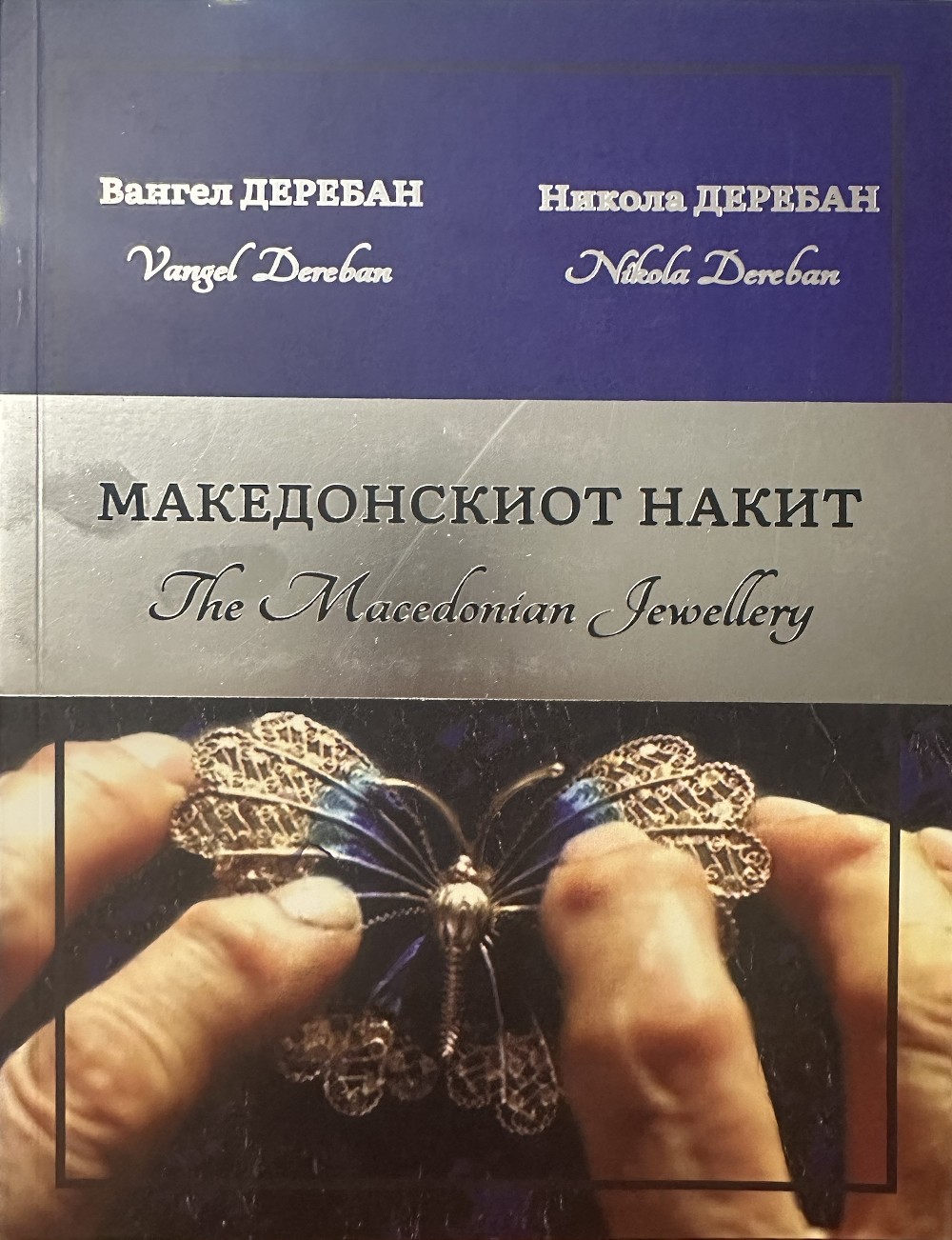
Source
The Macedonian Jewellery
The text on this page is based on the book The Macedonian Jewellery by Vangel Dereban and Nikola Dereban (Ohrid, 2021), which describes the materials, tools and recipes of the craft as they were used in the Dereban family for generations.
The book is available in the museum shop.
Contact
Location
MUSEUM OF FILIGREE – “VANGEL DEREBAN”
St. Clement of Ohrid 40
6000 Ohrid, North Macedonia
+389 71 321 462